A small procedure, considered carefully
Dr Nara has an interest in ear lobe repair. Patients come from all walks of life — some have had prolonged exposure to heavy earrings, others have had a tear or split from injury or accidental pull-through, and others are simply self-conscious about the appearance of an old or stretched piercing.
Ear lobe repair is performed in accredited and licensed facilities by healthcare staff trained specifically in cosmetic surgery. The edges of the ear lobe defect are trimmed to create fresh tissue edges that can be approximated cleanly. These edges are then brought together using a range of surgical techniques — the technique chosen depends on the shape of the defect, the thickness of the lobe and your goals.
Dr Nara and the team look into each patient's concerns carefully to assess whether you are a suitable candidate and that you understand the implications of surgery. Where surgery is appropriate, it is performed in an accredited and licensed facility, with a written cooling-off period and structured aftercare, in line with Medical Board of Australia guidelines. Most patients undergoing ear lobe repair report good satisfaction — but there are risks that must be understood before deciding to proceed.
A small operation is still an operation
In order to understand the risks of surgery unique to you, we strongly advise you obtain a second opinion before booking a consultation for ear lobe repair with Dr Nara. The list below is what we walk through line by line at consultation.
Common risks. Bleeding, infection, stitch prominence, wound breakdown, skin loss, numbness, and recurrence of the ear lobe defect.
Less common but possible. Permanent scarring, contour irregularities, or prolonged numbness — these are uncommon but not impossible, and they are part of the consent conversation.
The honest framing. "An ideal ear lobe? No. There are potential risks and complications" — Dr Nara's own words. Most patients have a good experience; that is not a guarantee of any individual outcome.
The full general list of cosmetic surgical risks is on our risks of surgery page. Specific risks relevant to your individual anatomy and history are discussed at consultation.
-
01 Why do patients consider ear lobe repair?
There is more than one reason. Some patients have had prolonged exposure to heavy earrings, which over time can elongate the lobe and increase the diameter of the piercing hole. Others have had an accidental tear or split from injury, snagging or sudden pull-through. Some are simply self-conscious about the appearance of an old or stretched piercing. -
02 How is the procedure done?
Ear lobe repair is performed in an accredited and licensed facility by healthcare staff trained specifically in cosmetic surgery. The edges of the ear lobe defect are trimmed to create new, fresh tissue edges that can be approximated cleanly. These edges are then approximated using surgical techniques. There are several techniques available depending on the shape of the defect, the thickness of the lobe and your goals — Dr Nara will discuss what is appropriate for your specific anatomy. -
03 How much does ear lobe repair cost?
A formal quote is only provided after your individual consultation, because each patient's anatomy, the technique chosen and the operative plan are different. The personalised quote is provided by Cate, the practice manager, after assessment. Dr Nara is a cosmetic doctor — private health insurance and Medicare rebates do not apply. -
04 What are the risks?
All surgery carries risks. For ear lobe repair these include bleeding, infection, stitch prominence, wound breakdown, skin loss, numbness, and recurrence of the ear lobe defect. The full risks are on our risks of surgery page and are worked through line by line at consultation. Most patients undergoing ear lobe repair report good satisfaction, but you need to understand the risks before deciding. -
05 What about swelling and bruising?
All patients have some swelling and bruising — this is a normal part of the healing process. The visible swelling typically settles over the first weeks, with continued softening of the scar over months. -
06 Can I be re-pierced after the repair?
This is a question to confirm with Dr Nara at your own review, since healing time varies between patients. Published clinical guidance generally suggests waiting in the order of three to six months before re-piercing, with the new piercing placed away from the repair scar rather than through it (Cleveland Clinic). Dr Nara will give you specific guidance for your own ears once he can see how your particular repair has healed. -
07 Can earlobe glue, magnetic earrings or support patches fix a torn or stretched lobe?
Published clinical guidance describes surgical closure as the established treatment for a full split or significant stretching, and we are not aware of any recognised clinical guidance describing glue, adhesive patches or magnetic backings as a repair for torn tissue (Cleveland Clinic). Very mild gauge stretching may lessen a little on its own over months to years, but a genuine tear or split generally does not close without treatment. Magnetic or clip-style earrings and support patches may suit someone who isn't ready for a procedure, but they do not repair the underlying tissue itself. What is realistic for your particular lobe is best discussed with Dr Nara at consultation. -
08 What about scarring?
All cosmetic surgery has some degree of scarring. The scar from an ear lobe repair sits along the line of the previous defect and is generally small. Scars are permanent. They tend to soften and fade over months to years, but how an individual scar matures is influenced by genetic and personal factors. Where a scar settles unevenly, revision options can be discussed with Dr Nara at a follow-up review: this is not guaranteed to change the outcome, and any revision is only considered once the original scar has fully matured. -
09 What happens at consultation?
A face-to-face assessment with Dr Nara, with a chaperone present. We discuss the shape of the defect, the technique options, the realistic range of outcomes and the full risks. You leave with written information — never a same-day decision. A specialist GP referral and a psychological assessment are part of the consultation per Medical Board of Australia guidelines. You are also free to check any practitioner's registration before you book; our guide to checking a doctor's AHPRA registration explains how. -
10 How long is the cooling-off period?
A formal cooling-off period applies between consultation and any procedure, in line with Medical Board of Australia guidelines for cosmetic surgery. The intent is the opposite of pressure — time to read the written consent paperwork, talk to your GP, ask follow-up questions, and decide whether to proceed. The full sequence, including exactly when the seven days start counting, is set out in our guide to consultations and the cooling-off period in Australia.
Our process
From first conversation to follow-up
Every ear lobe repair patient moves through the same four steps, in the same order. Surgery only happens once steps one and two are done.
- 01
Consultation
A face-to-face or Zoom assessment with Dr Nara, with a chaperone present. We discuss anatomy, medical history, technique options, the realistic range of outcomes, and the full risks. You leave with written information — never a same-day decision.
- 02
Reflection
A formal cooling-off period under Medical Board of Australia guidelines. Time to reread the consent paperwork, talk to your GP, ask follow-up questions, and decide whether to proceed.
- 03
Procedure
Performed by Dr Nara in an accredited and licensed facility, generally under local anaesthetic. Technique is tailored to the shape of the defect, the thickness of the lobe and your goals. You go home with written aftercare and Dr Nara's direct contact.
- 04
Follow-up
Structured reviews through the first weeks. Most patients return to non-physical work the next day, with normal activity reintroduced quickly. Re-piercing — if planned — is discussed only after full healing has occurred.
Photographic record
Before & after — Dr Nara's patients
Two patients' records below, each presented with consent. The first patient is shown at 9 days from surgery — swelling and bruising are a normal part of the healing process. Results vary considerably between people based on the shape of the original defect, healing and personal factors.
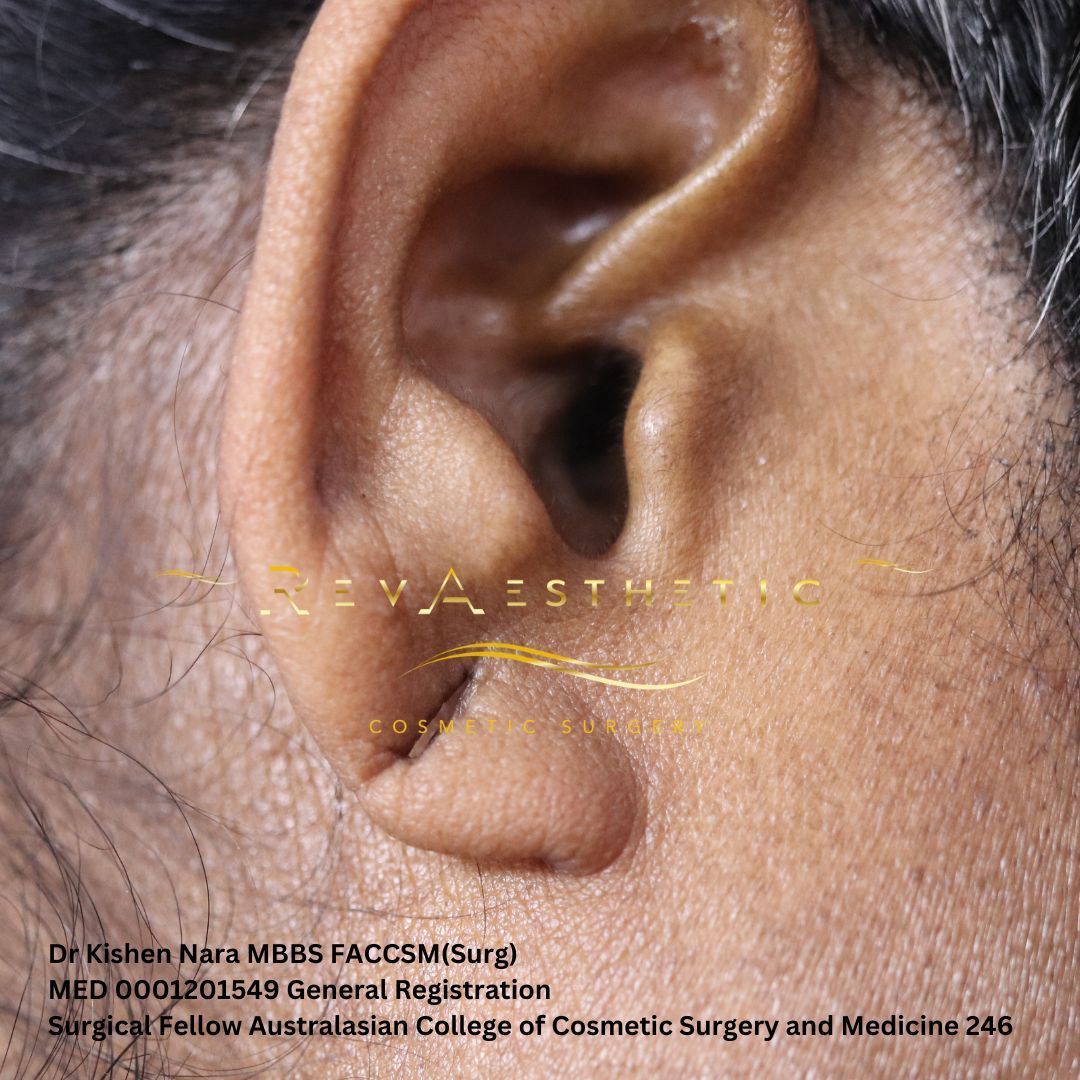
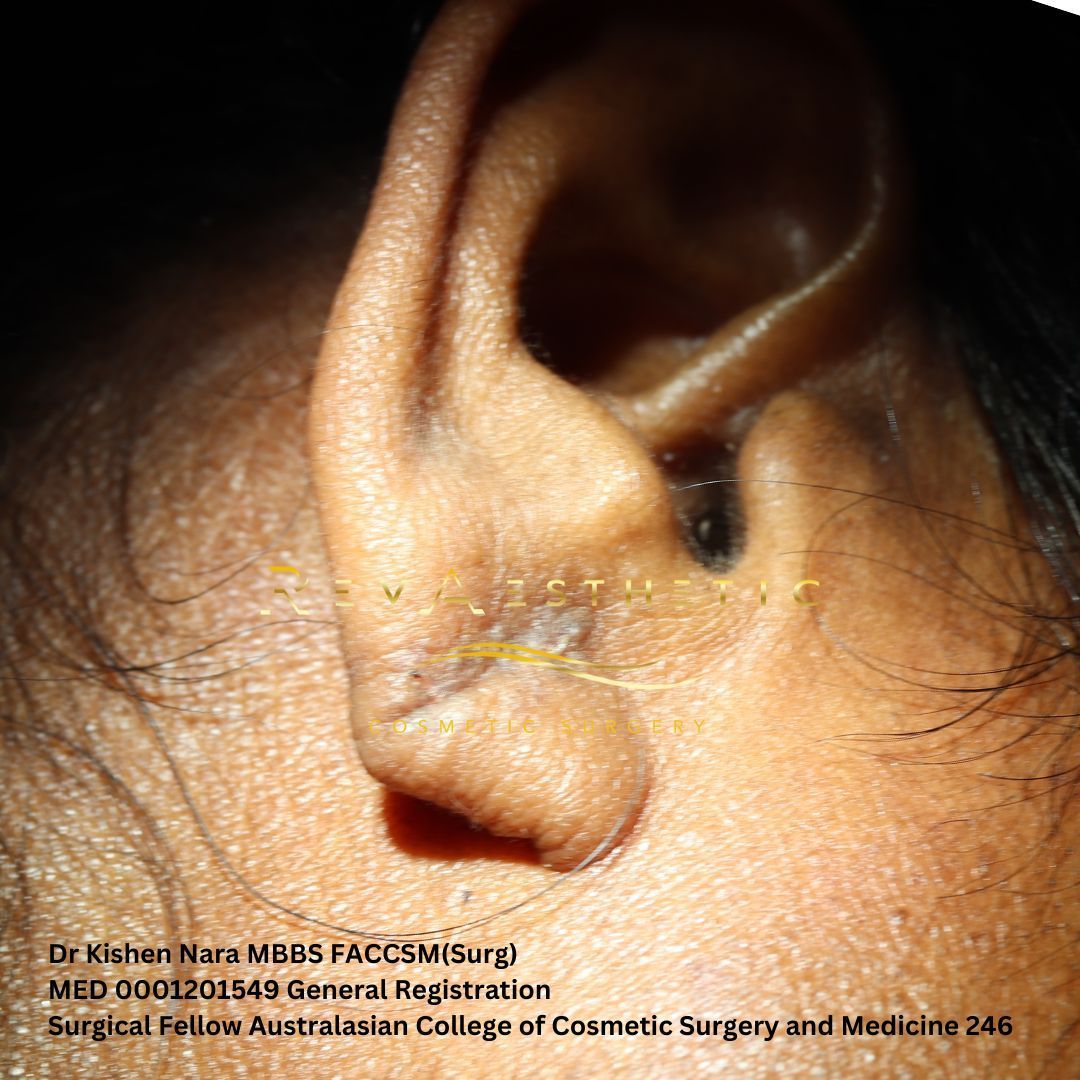
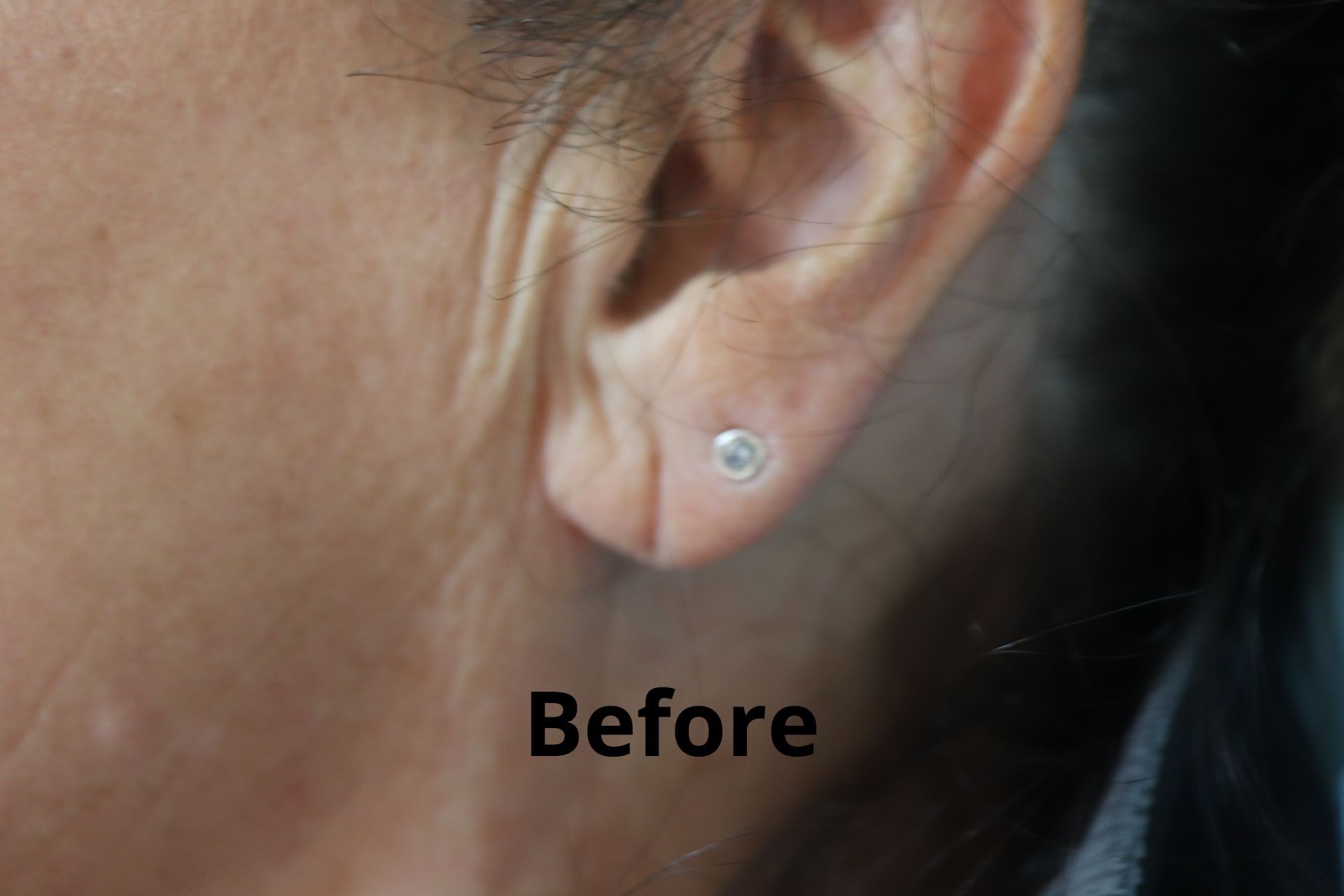
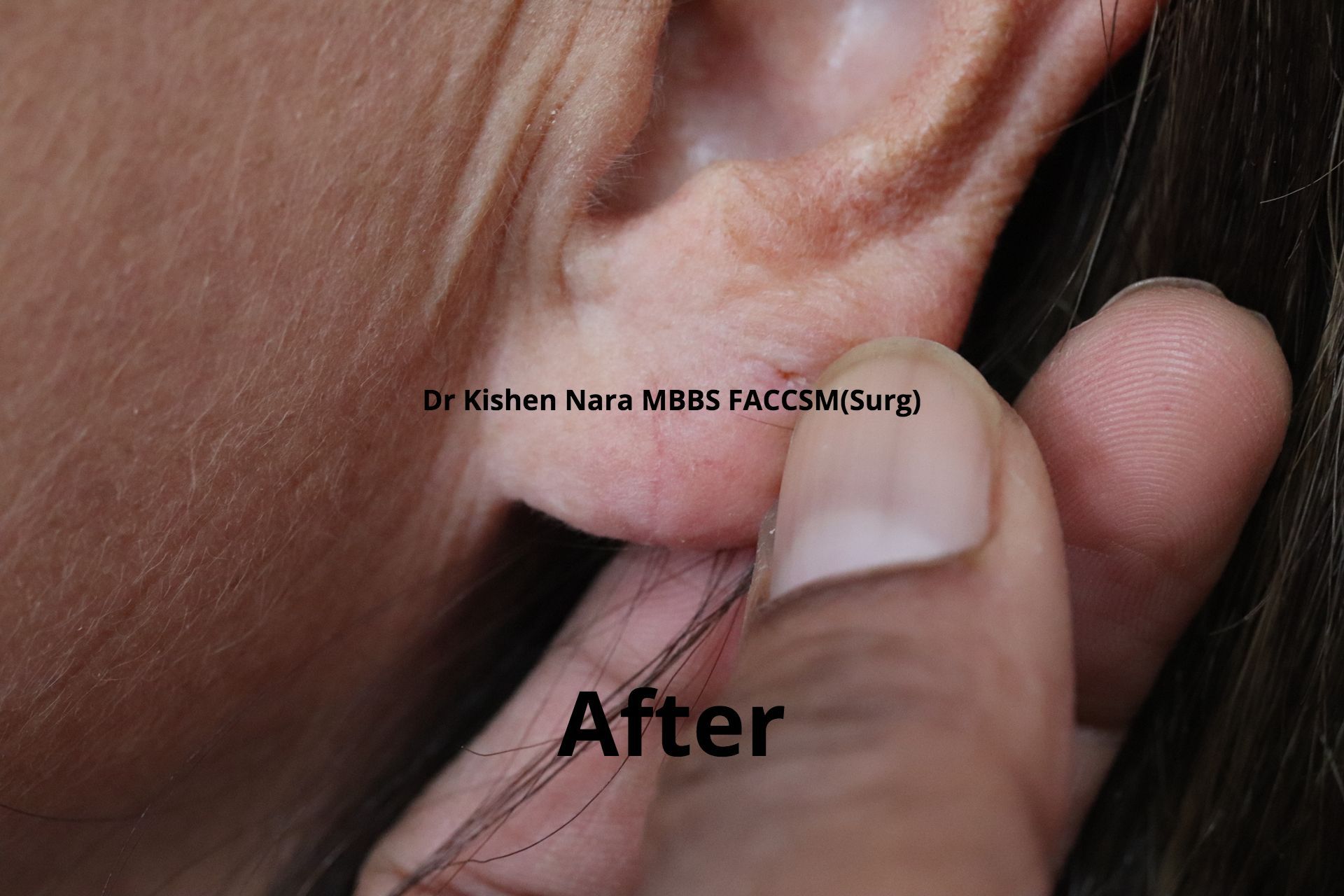
Photographs are part of a clinical record kept under Australian Medical Board guidelines, presented here with patient consent, and are not generalisable to other patients. If you would like to talk through what is — and isn't — addressable for you specifically, the next step is a consultation.
A word from Dr Nara
A short word from the practitioner
Ear lobe repair is a small operation that hides considerable anatomical variation underneath.
"An ideal ear lobe? No! There are potential risks and complications."
Before you book
Come and speak with us about your expectations
We will work with you towards your goals in a trusted, safe and proficient manner. Results vary from patient to patient — each case is unique with its own anatomy, defect shape, healing capacity and expectations.
All treatments have risks and benefits — to read those in detail, visit our risks of surgery page. It is important to seek a consult with your practitioner in person prior to any treatment, and we encourage you to seek a second opinion from a qualified health professional before proceeding.
Begin a conversation
Reserve your consult
Ear lobe repair decisions are made in person, after a careful assessment with a chaperone present. A formal quote is only provided after that consultation.
Submitting this form sends your enquiry to Dr Nara's team. Please don't include sensitive medical details — those are discussed at consultation.