Altering the look of the chest, considered carefully
Gynaecomastia by definition is the appearance of female breast shape on the male chest. Usually this is benign — but sometimes it may be due to underlying medical conditions, which is why a thorough medical assessment forms part of every consultation.
To have an insight about gynaecomastia surgery, it is important to ask questions and learn from each case description further down this page. All patients who have gynaecomastia surgery do not have the same surgery. Some patients may have only liposuction. Some may have only subcutaneous mastectomy. Others have a tailored combination including periareolar mastopexy or areolar reduction.
The operation requires a dedicated team, patient respect and a comprehensive process. Where surgery is appropriate, Dr Nara performs the procedure under general anaesthetic in an accredited and licensed facility, with a written cooling-off period and structured aftercare, in line with Medical Board of Australia guidelines.
- 01
Is it painful?
All surgeries require time to heal. During this time you can expect discomfort, however modern measures help with discomfort. Each patient responds differently and the degree of discomfort varies between people.
- 02
Time to recovery in the immediate phase after surgery
Generally around ten days for the early phase, with most patients returning to non-physical work in that window. These are individual ranges, not promises.
- 03
When may I resume my routine exercises?
This depends on the intensity of your exercises. In most cases it will take at least six to eight weeks. Light activity is generally introduced earlier and progressed under clinical guidance.
- 04
When can I expect the full recovery?
Approximately six months. Swelling and the final settle of the chest shape continue to evolve through that window.
- 05
Are there risks?
Yes — there are risks of scarring, bruising and swelling, as well as bleeding, infection, asymmetry, sensation changes, wound healing problems and the possibility of revision surgery. The full list is on our risks of surgery page and is worked through with Dr Nara at consultation.
-
01 Will gynaecomastia go away on its own?
It depends on the cause. Gynaecomastia that appears during puberty often settles on its own over one to two years. In adults, gynaecomastia that has been present for a longer period, or that is due to firm glandular tissue rather than fat alone, is less likely to resolve without treatment. Because enlarged male breast tissue can occasionally have an underlying medical or medication-related cause, the starting point is an assessment, and Dr Nara will look into contributing factors as part of the consultation before surgery is considered. -
02 Are there different grades of gynaecomastia, and is there a suitable age for surgery?
Gynaecomastia is commonly described in grades, from mild enlargement through to more significant tissue and skin changes, and the grade influences whether liposuction alone, gland removal, or skin adjustment is discussed. There is no single right age for surgery. It is generally considered once puberty-related changes have settled and any underlying cause has been assessed, rather than at a fixed age. Suitability, including your general health, is assessed individually at consultation with Dr Nara. -
03 Is gynaecomastia surgery painful?
All surgeries require time to heal. During this time you can expect discomfort. Modern measures help with discomfort. Each patient responds differently and the degree of discomfort varies between people. The full risks and the recovery profile are worked through line by line at consultation. -
04 When may I resume my routine exercises?
This depends on the intensity of your exercises. In most cases it will take at least 6–8 weeks. Light activity is generally introduced earlier and progressed under clinical guidance. These are individual ranges, not promises. -
05 What techniques are used?
All patients who have gynaecomastia surgery do not have the same surgery. Some patients may have only liposuction. Some may have only subcutaneous mastectomy. Others have a tailored combination — for example liposuction with glandular tissue removal and an areolar reduction procedure. The operation is tailored to your individual chest, the proportion of fat to glandular tissue, the position of the areolar complex and what you are trying to address. -
06 What does the assessment involve?
Each patient has a personalised consultation where the advantages and disadvantages of gynaecomastia surgery are discussed. Dr Nara will perform a meticulous cosmetic and medical assessment that includes a psychological assessment, in line with Medical Board of Australia guidelines for cosmetic surgery. A specialist GP referral is part of the process. -
07 What about scarring?
All cosmetic surgery has some degree of scarring. The incision pattern depends on the technique used — liposuction-only cases generally have small access incisions, while subcutaneous mastectomy or periareolar approaches involve a scar around the areola. Scars are permanent. They tend to soften and fade over months to years, but how an individual scar matures is influenced by genetic and personal factors and is not predictable in advance. -
08 What about the recovery garment?
Patients are typically asked to wear a gynaecomastia compression garment after surgery. Compliance with the after-surgery instructions — including the garment — is one of the factors that influences the recovery. -
09 What are the risks of gynaecomastia surgery?
All surgery carries inherent risks. For gynaecomastia surgery these include bruising and swelling, bleeding, infection, asymmetry, sensation changes (which may be temporary or permanent), wound healing problems, scarring, the possibility of revision surgery, and individual issues such as a stitch reaction. The full list is on our risks of surgery page and is worked through line by line at consultation. -
10 How much does gynaecomastia surgery cost?
A formal quote is only provided after your individual consultation, because each patient's anatomy, the technique chosen and the operative plan are different. Cost is one factor among several worth weighing — including who is performing the procedure, where it is performed, the consent process, the recovery time you can take, and the support you have at home. The personalised quote is provided by Cate, the practice manager, after assessment. Dr Nara is a cosmetic doctor — private health insurance and Medicare rebates do not apply. -
11 What happens at consultation?
There are two appointments before any surgical decision. The first is a face-to-face or Zoom assessment with Dr Nara that takes time — anatomy, medical history, technique options, the realistic range of outcomes and the full risks are all discussed, with a chaperone present. The second is a follow-up to revisit anything you have thought about since. A specialist GP referral and a psychological assessment are part of the consultation per Medical Board of Australia guidelines. You are also free to check any practitioner's registration before you book; our guide to checking a doctor's AHPRA registration explains how. -
12 How long is the cooling-off period?
A formal cooling-off period applies between consultation and any procedure, in line with Medical Board of Australia guidelines for cosmetic surgery. The intent is the opposite of pressure — time to read the written consent paperwork, talk to your GP, ask follow-up questions, and decide whether to proceed. The full sequence, including exactly when the seven days start counting, is set out in our guide to consultations and the cooling-off period in Australia.
Our process
From first conversation to follow-up
Every gynaecomastia patient moves through the same four steps, in the same order. Surgery only happens once steps one and two are done.
- 01
Consultation
A face-to-face or Zoom assessment with Dr Nara, with a chaperone present. We discuss anatomy, medical history, technique options, the realistic range of outcomes, and the full risks. You leave with written information — never a same-day decision.
- 02
Reflection
A formal cooling-off period under Medical Board of Australia guidelines. Time to reread the consent paperwork, talk to your GP, ask follow-up questions, and decide whether to proceed.
- 03
Procedure
Performed by Dr Nara under general anaesthetic at an accredited and licensed facility. Liposuction, glandular reduction or subcutaneous mastectomy — singly or in combination — are tailored to your individual assessment. You go home with a compression garment, written aftercare and Dr Nara's direct contact.
- 04
Follow-up
Structured reviews through the first weeks and months. Most patients return to non-physical work around one week and to higher-impact activity around six weeks, depending on healing — these are individual ranges, not promises.
Photographic record
Before & after — Dr Nara's patients
Four patient records below, each presented with consent. Photographs are unedited and not retouched. Results vary considerably between people based on anatomy, the technique used, healing and personal factors.
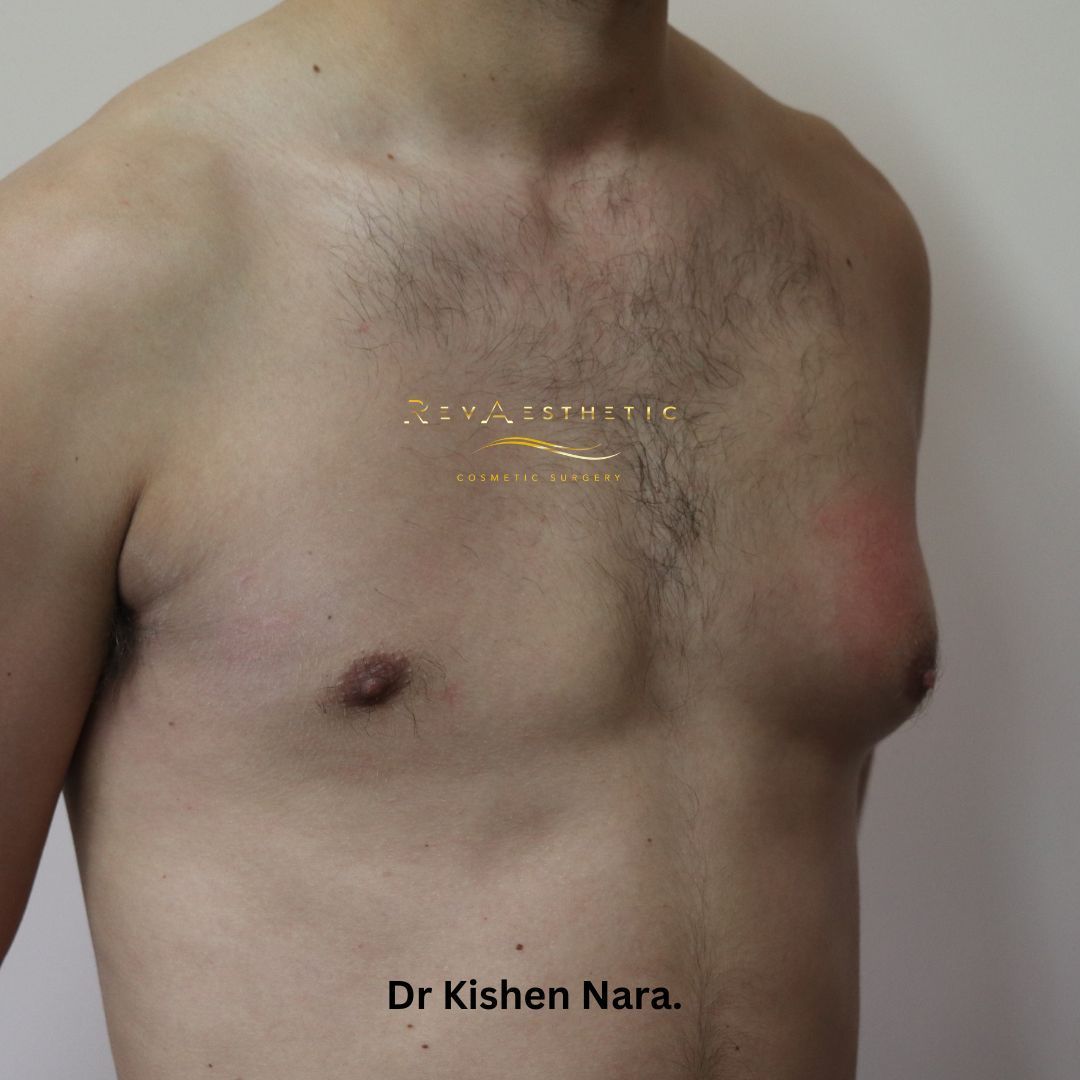
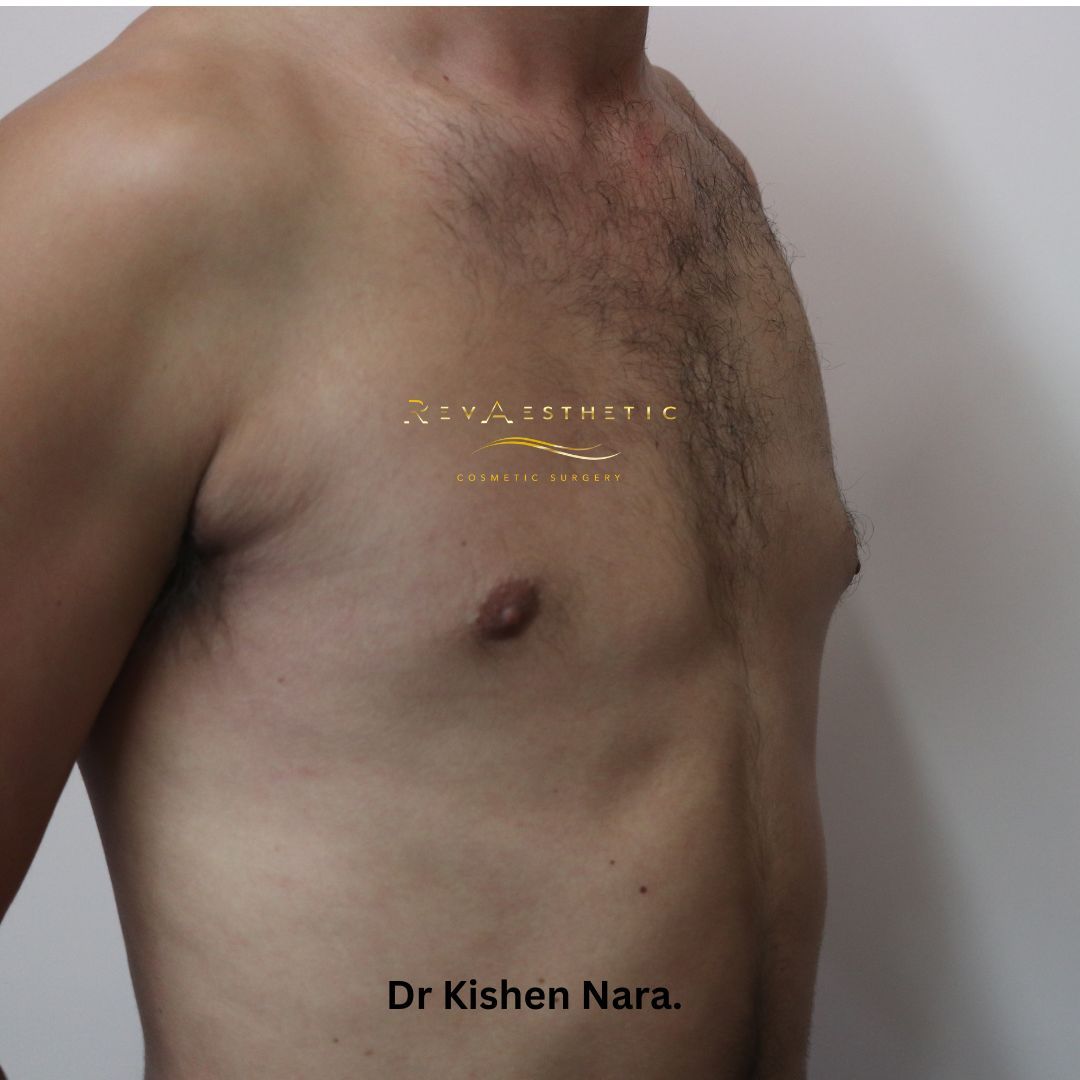
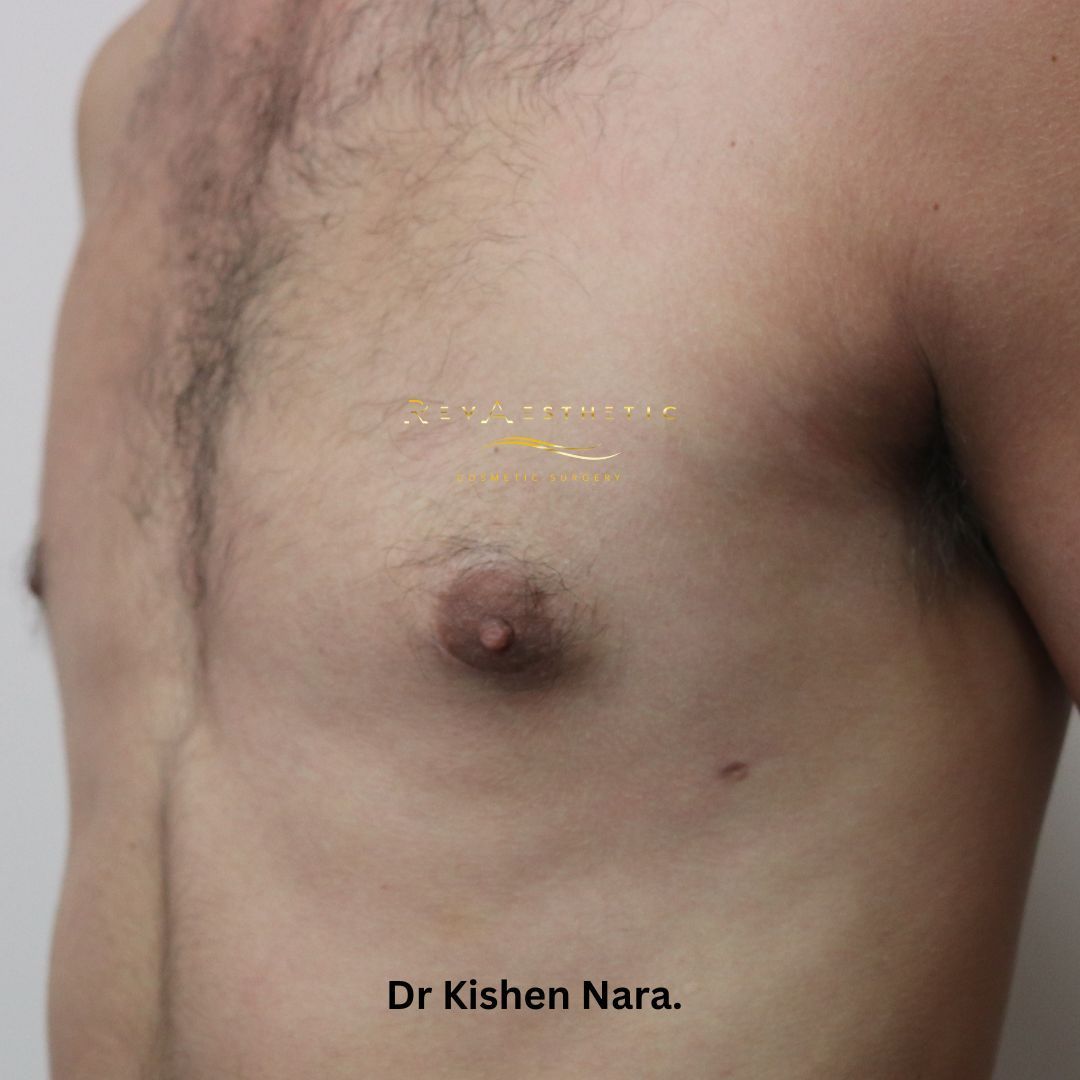
27-year-old · left-sided gynaecomastia · 5 months post-procedure
A 27-year-old gentleman who wanted to address increased fullness on one side of the chest by altering the look to make it more symmetrical to the less fuller side. He had a thorough medical and psychological assessment prior to surgery to ensure the risks of surgery were minimised. He was compliant with instructions after surgery. Results shown at 5 months from surgery.
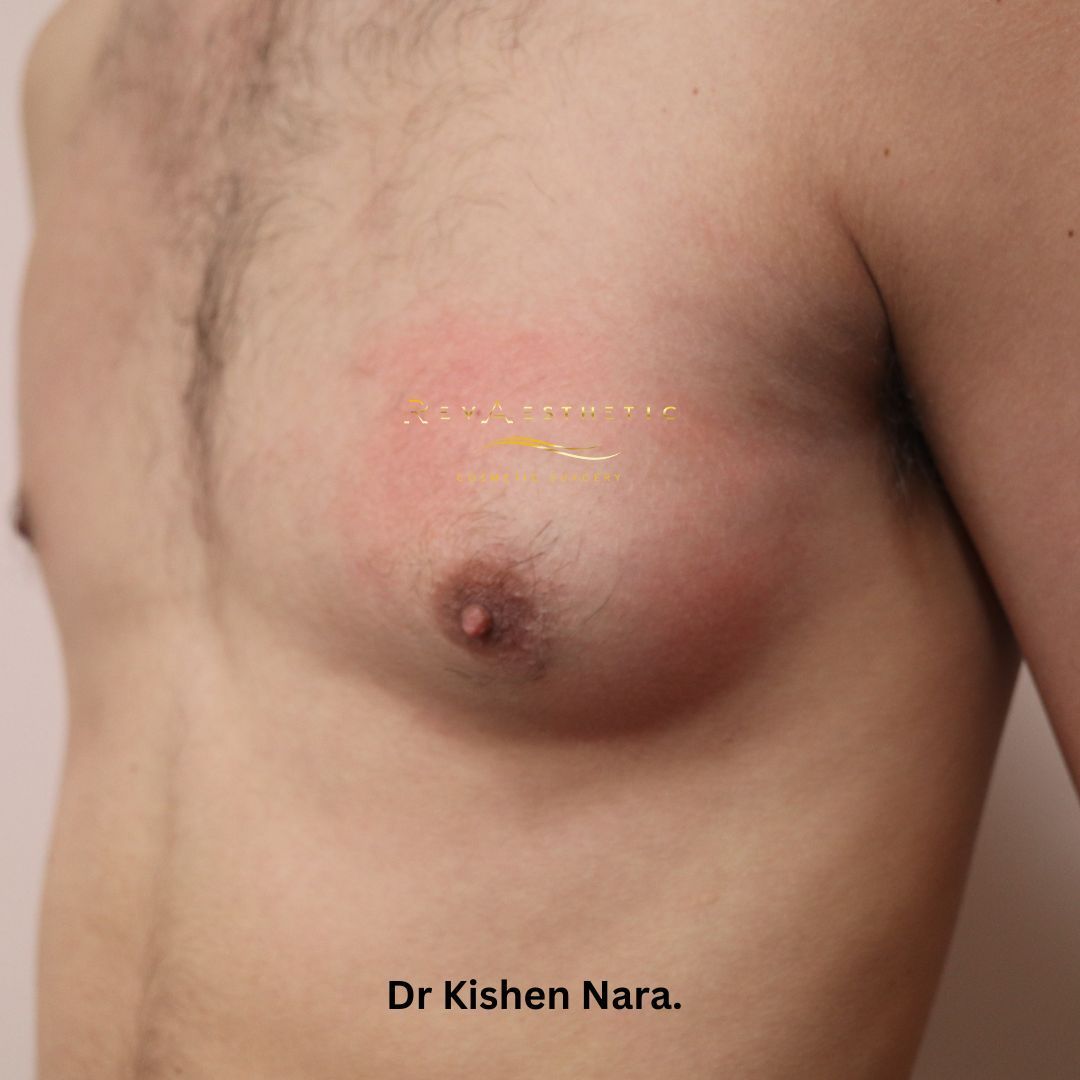
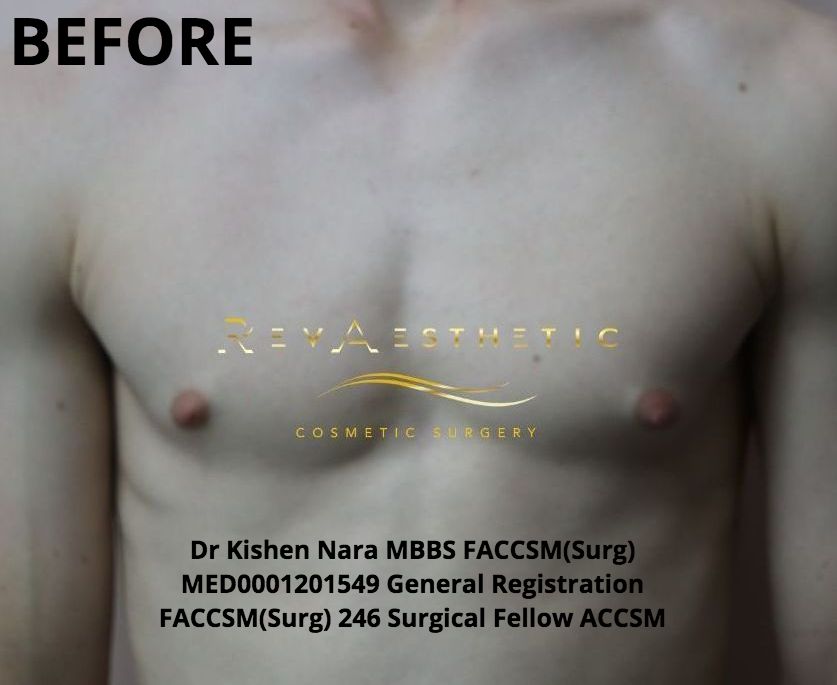
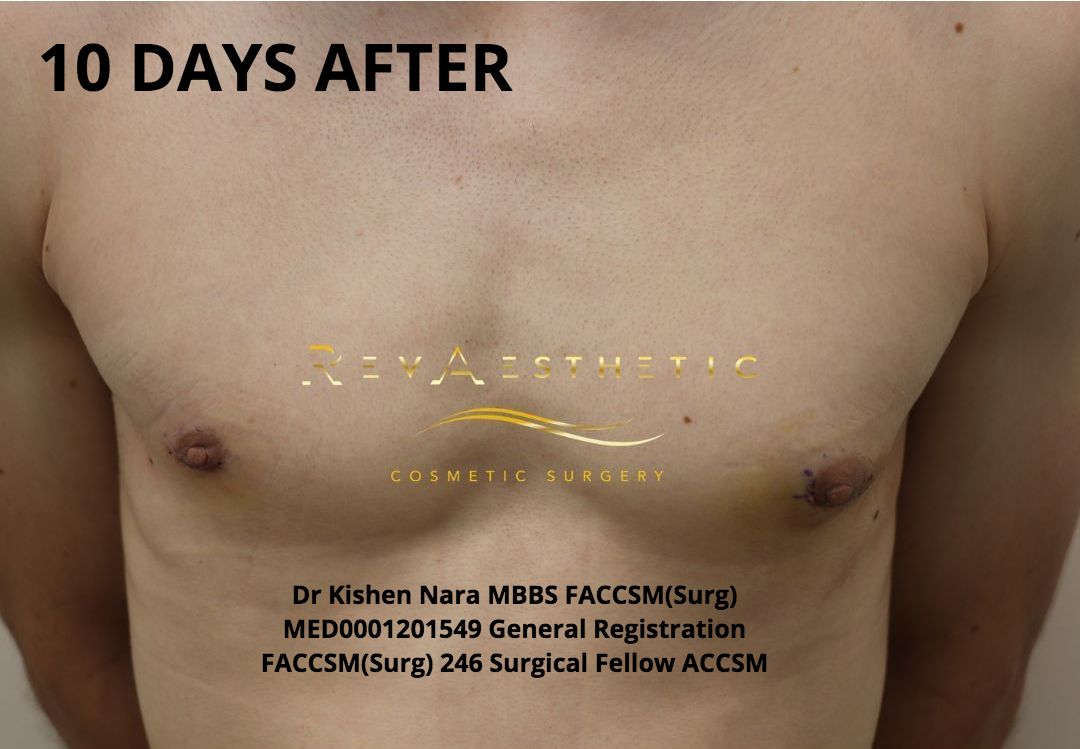
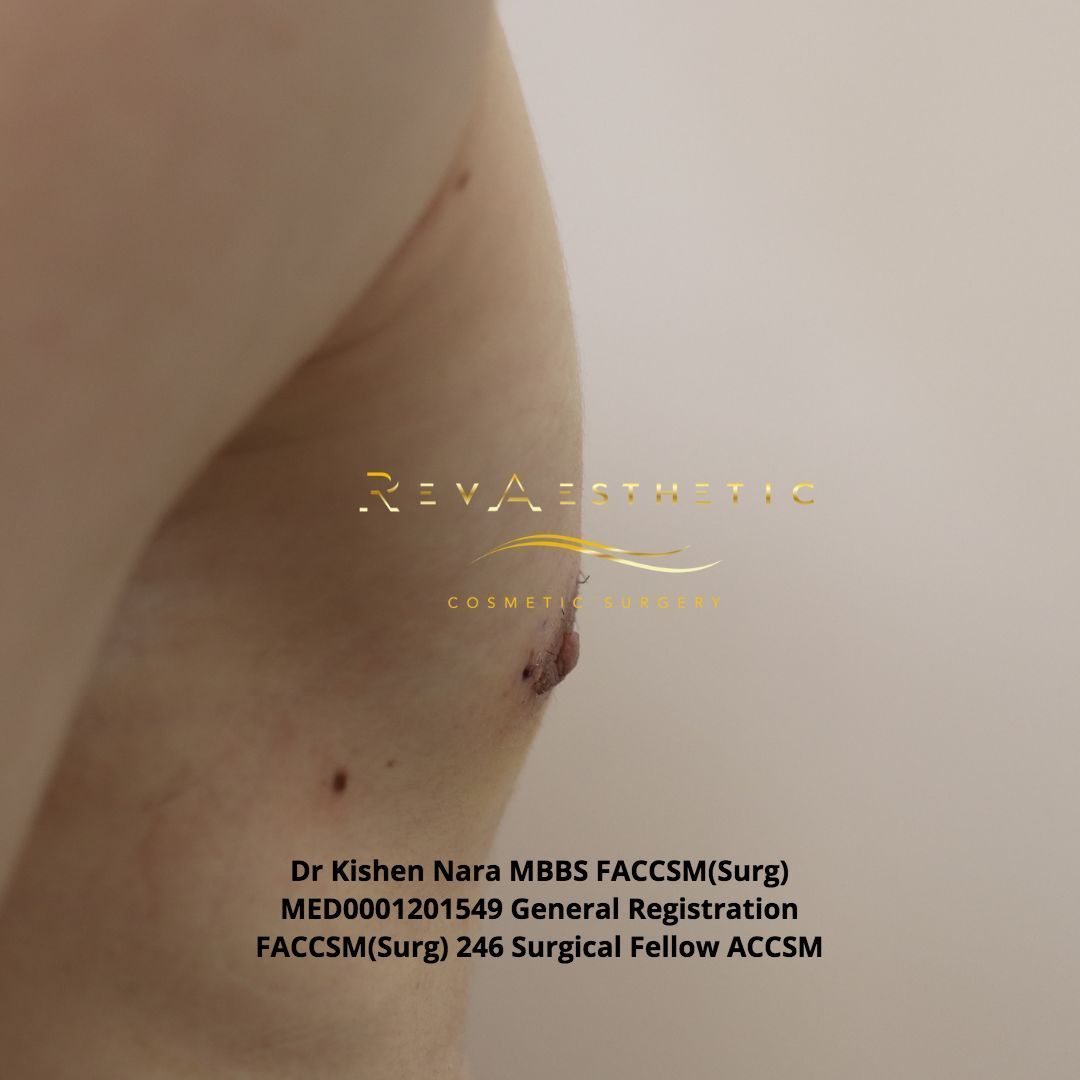
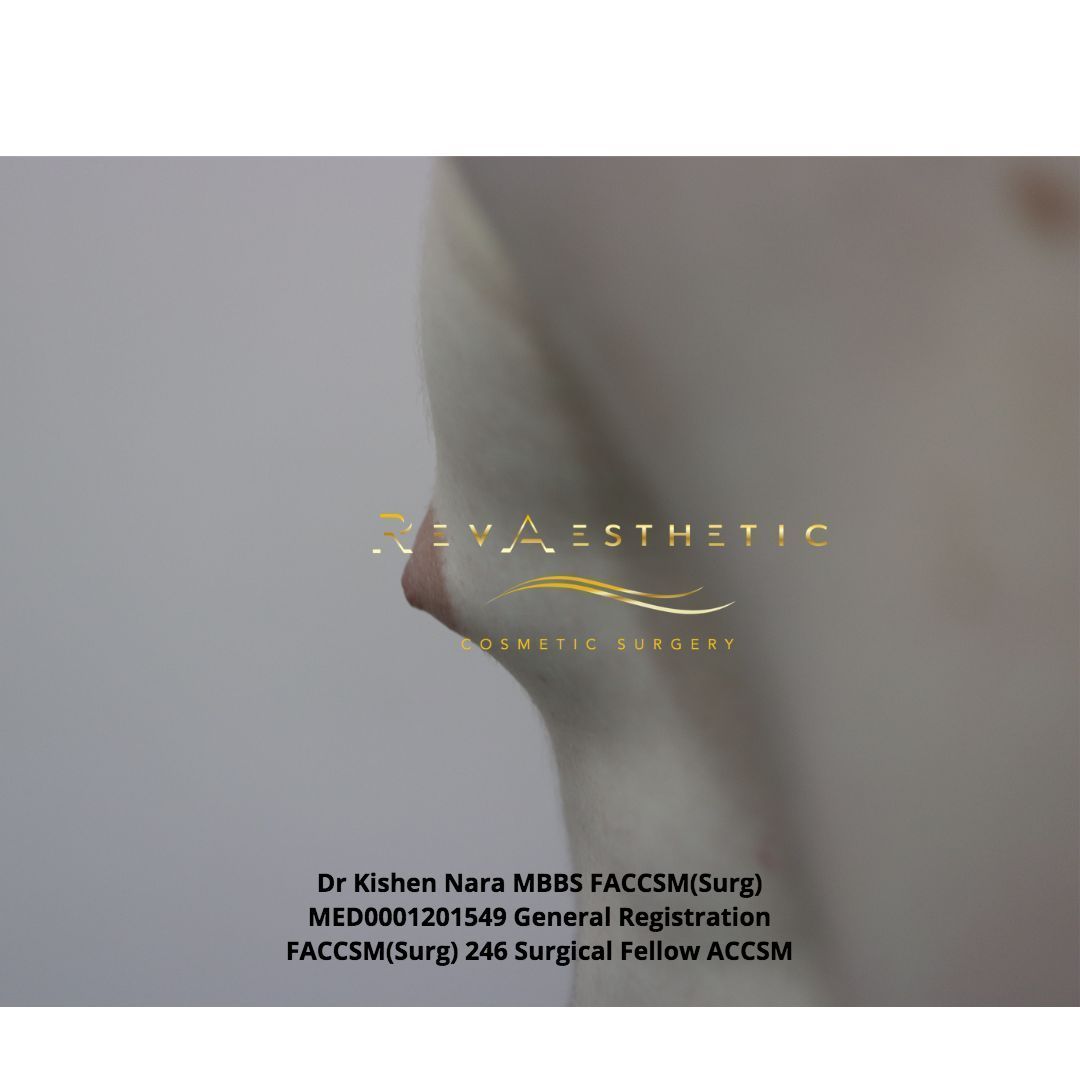
27-year-old · liposuction + subcutaneous mastectomy + areolar reduction · 10 days post-procedure
A 27-year-old gentleman who decided to have gynaecomastia surgery with Dr Nara after a thorough psychological, medical and cosmetic assessment in line with Medical Board of Australia guidelines. The herniation of the areolar tissues had been prominent for several years. Surgery was performed to reduce the areolar herniation, altering the shape of the nipple areolar complexes. Results shown at 10 days from surgery with expected bruising and underlying swelling. The patient was compliant with all instructions including the use of a gynaecomastia compression garment.
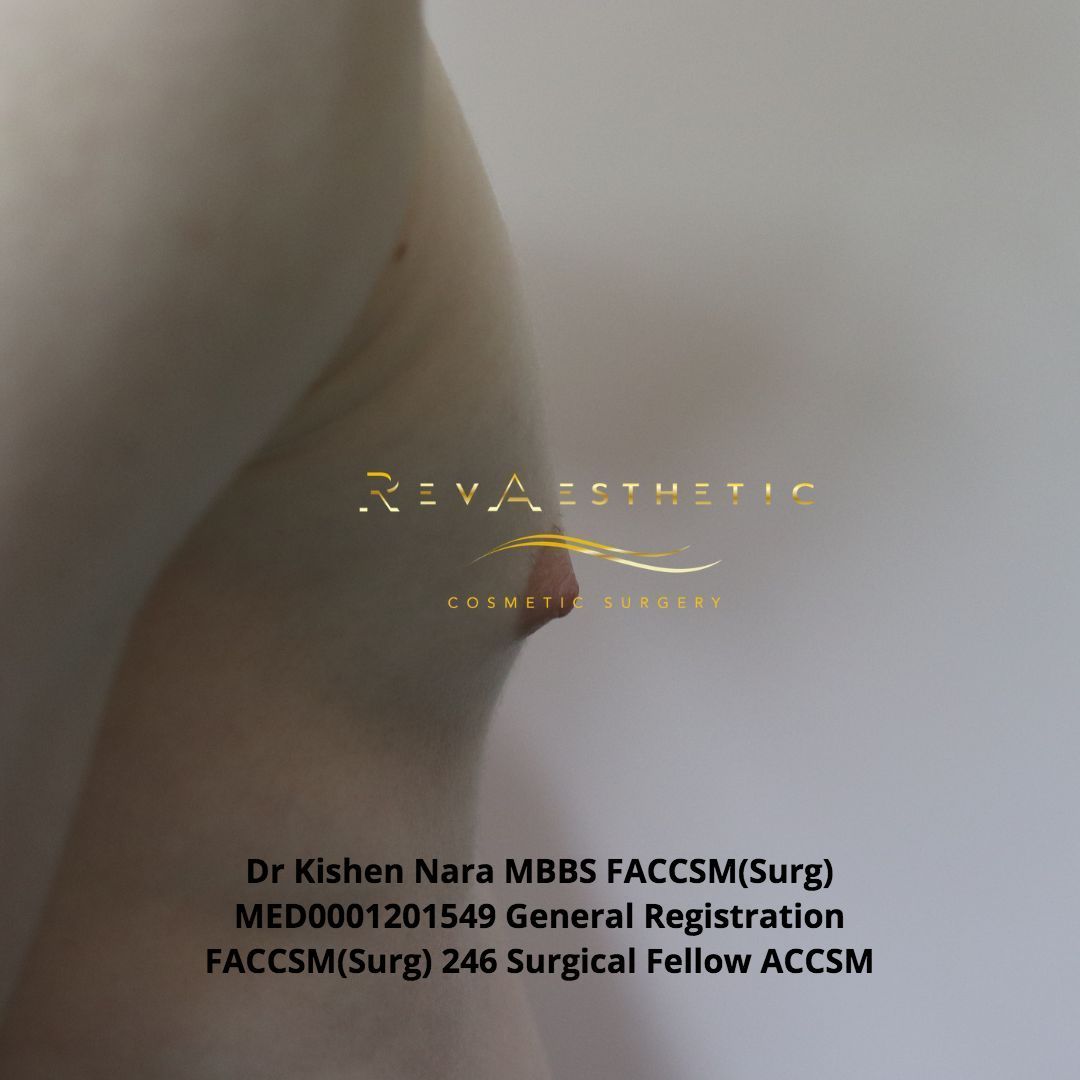
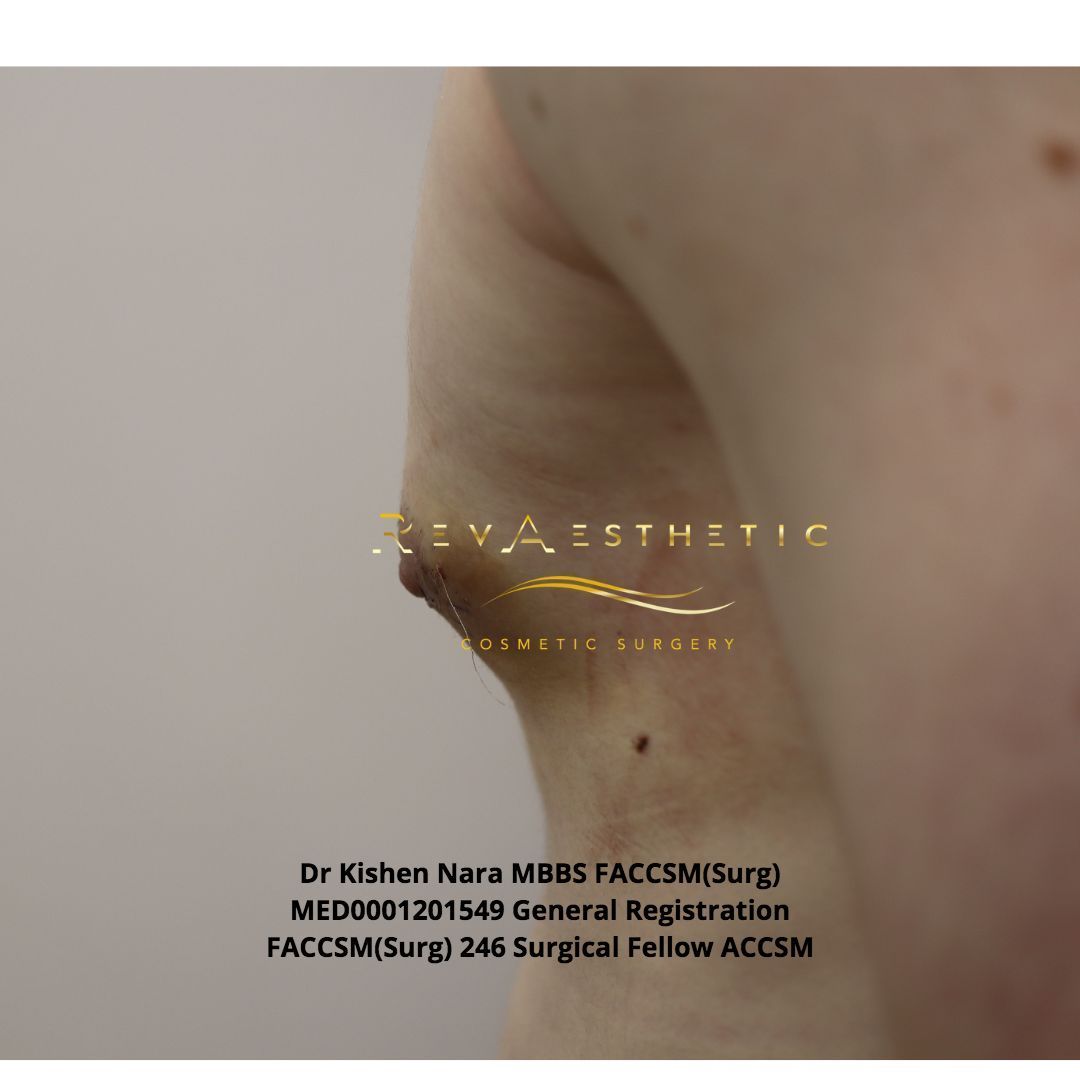
34-year-old · liposuction + subcutaneous mastectomy · 7 months post-procedure
A 34-year-old male patient who works hard at the gym and who tried conservative management to address gynaecomastia prior to seeing Dr Nara. At his personalised consultation, the advantages and disadvantages of gynaecomastia surgery were discussed. After being informed about the nature, options of surgery and aftercare strategies, he decided to have liposuction and subcutaneous mastectomy. Results shown 7 months from surgery. During recovery he was compliant with all instructions and adhered to the after-care guidelines.
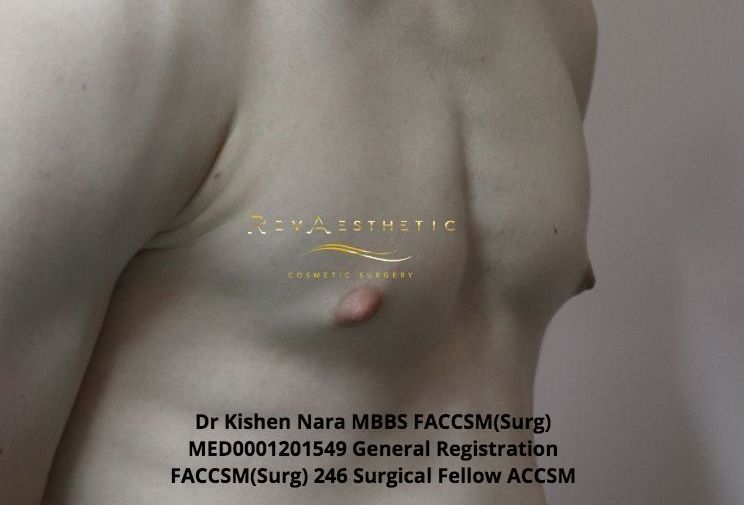
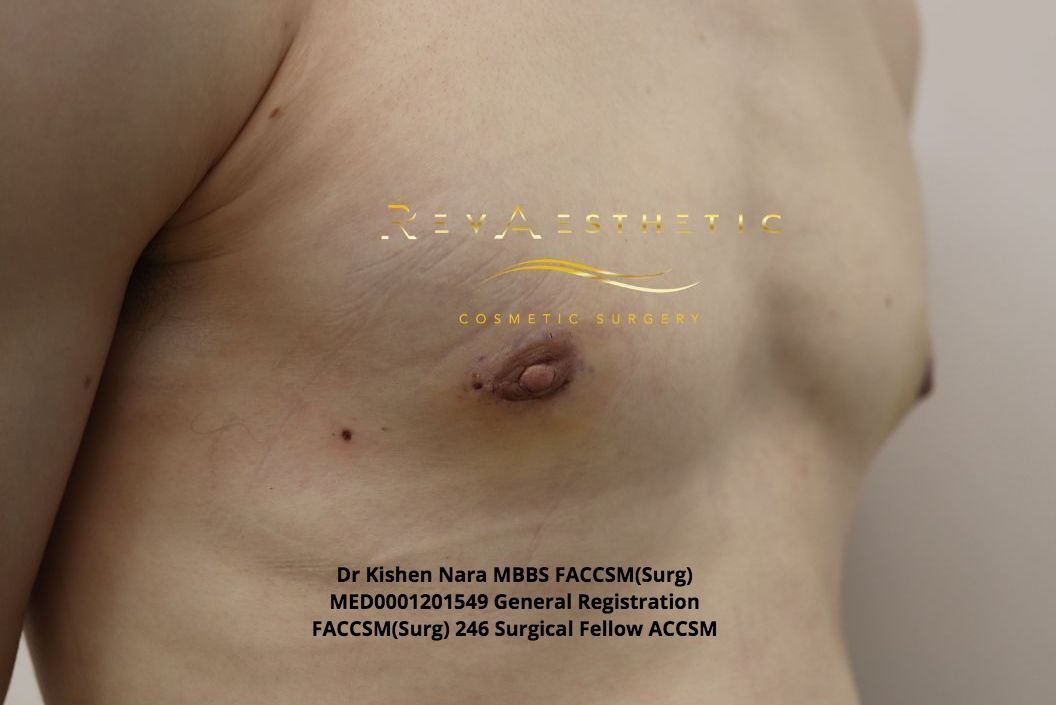
Combined chest liposuction + periareolar mastopexy + subcutaneous mastectomy · 6 months post-procedure
Combined gynaecomastia surgery with chest liposuction, periareolar mastopexy and subcutaneous mastectomy. Results shown at 6 months post-procedure.
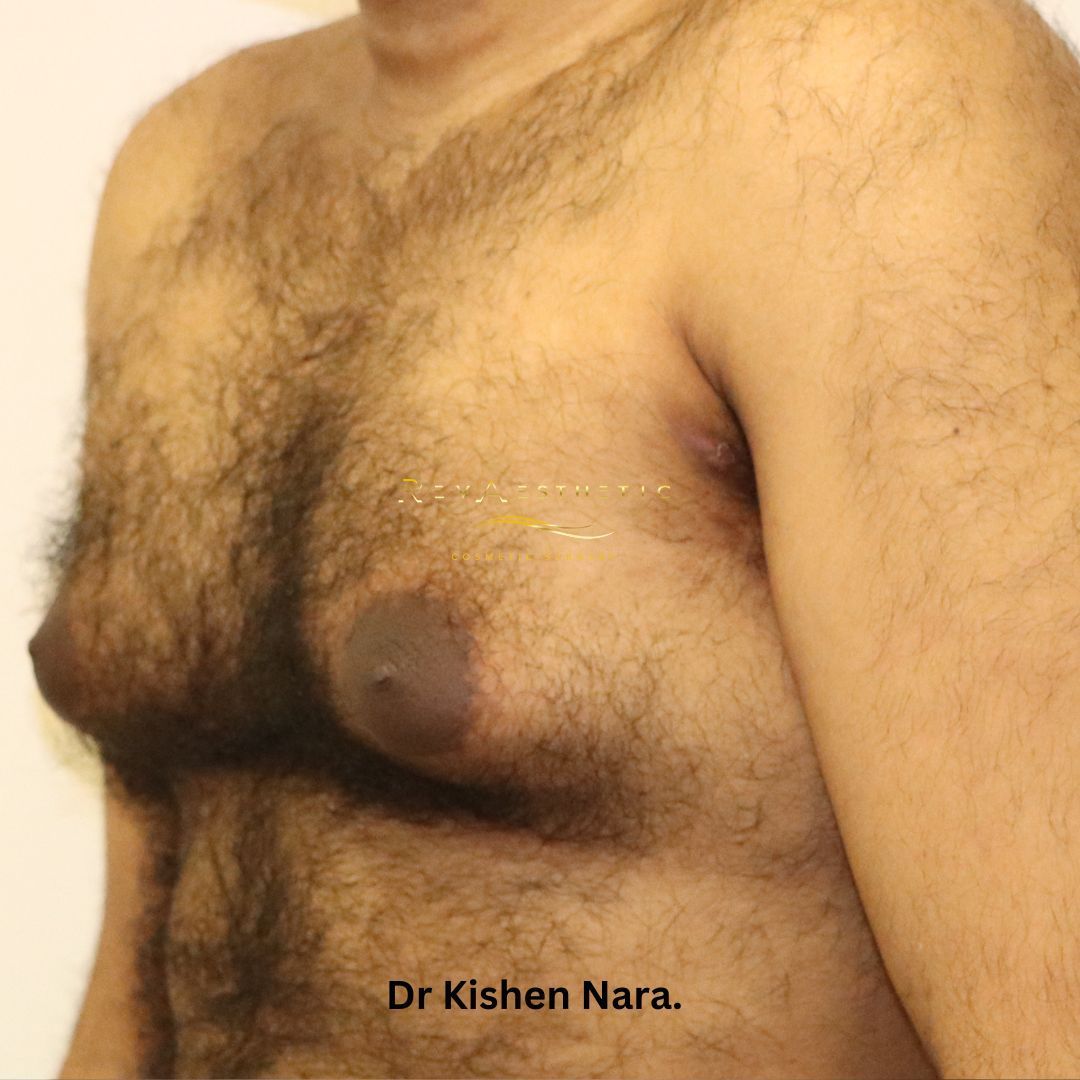
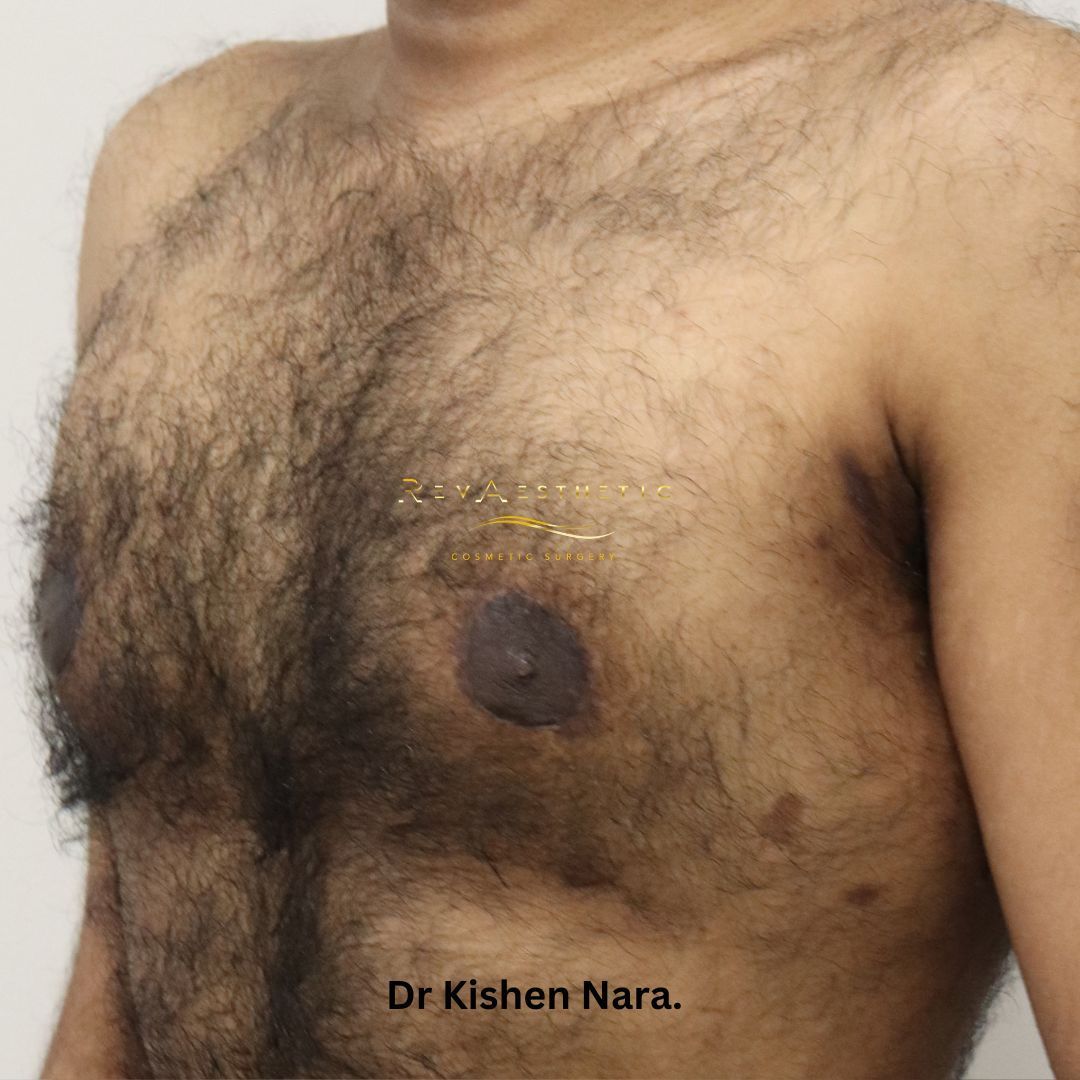
The operation for gynaecomastia surgery requires a dedicated team, patient respect and a comprehensive process. Dr Nara thanks each patient who has allowed their record to be displayed here. Photographs are part of a clinical record kept under Australian Medical Board guidelines, presented with patient consent, and are not generalisable to other patients. If you would like to talk through what is — and isn't — addressable for you specifically, the next step is a consultation.
Before you book
Come and speak with us about your expectations
We will work with you towards your goals carefully, safely and at your pace. Results vary from patient to patient, as each case is unique with its own anatomy, risks and expectations.
All treatments have risks and benefits — to read those in detail, visit our risks of surgery page. It is important to seek a consult with your practitioner in person prior to any treatment, and we encourage you to seek a second opinion before proceeding.
Begin a conversation
Reserve your consult
Gynaecomastia decisions are made in person, after a thorough assessment with a chaperone present. A formal quote is only provided after that consultation, because anatomy, the proportion of fat to glandular tissue and the operative plan differ between patients.
Submitting this form sends your enquiry to Dr Nara's team. Please don't include sensitive medical details — those are discussed at consultation.