Revision implants, a careful conversation
Achieving a specific shape and look with your respective body requires an extensive and comprehensive consultation — especially if you had breast augmentation with implants in the past. The consultation is what empowers you to be confident in your decision-making, whether you have surgery or not.
Patients raise revision for a range of reasons — capsular contracture, asymmetry, size change over time, the age of the implants, prior surgery the patient is no longer happy with, or new symptoms that warrant evaluation. The pathway can involve removal of the existing implants only, removal and replacement with new implants, or removal combined with a lift to address tissue position.
Specialised detailed assessments and surgical techniques are required to meet realistic expectations. Not all patients are suitable for cosmetic surgery, and it is important to make an informed decision before any cosmetic undertaking — Dr Nara will discuss your options at the consult, including conservative management.
Where surgery is appropriate, Dr Nara performs the procedure under general anaesthetic in an accredited and licensed facility, with a written cooling-off period and structured aftercare, in line with Medical Board of Australia guidelines.
If this is your first breast augmentation rather than a revision, read more about breast augmentation with implants. If you are considering having implants removed without replacement, read more about breast implant removal.

One patient's revision pathway
All patients have different goals following revision breast surgery. The case below is shared with consent to illustrate the kind of decisions a revision conversation involves — not to suggest a typical outcome.
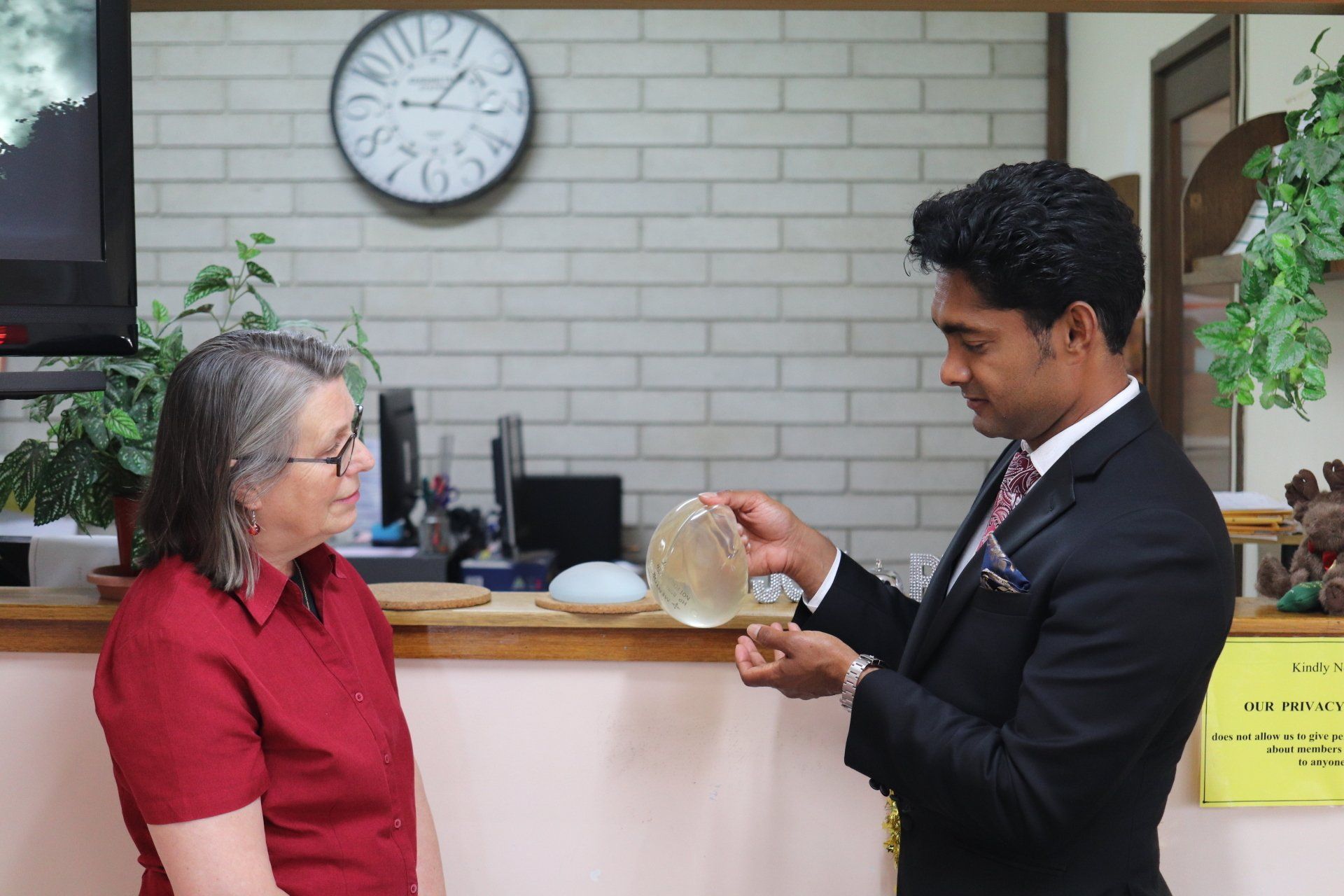
This patient had previously undergone breast augmentation with implants and was considering revision. After a thorough consultation with Dr Nara — discussing the advantages and disadvantages of every option, including conservative management — she decided to have removal and replacement of her breast implants, with larger implants than her initial surgery.
The plan also involved partial removal of the capsules, a capsullorrhaphy (a controlled tightening of the surrounding pocket), and insertion of synthetic absorbable mesh. The existing pockets were thoroughly washed with antibiotic solution. The mesh was secured to the breast footprint, and it also provided a complete envelope of the implants — important for supporting larger implants against gravity and time.
Removal and replacement of breast implants alone — with larger implants — may not provide a favourable outcome in the long term. This is why further surgical adjuncts, especially the insertion of absorbable mesh, were required in this patient's plan. Each revision is its own conversation: what is appropriate for one patient is not appropriate for another.
The result is shown in the gallery further down this page. Photographs are part of a clinical record kept under Australian Medical Board guidelines, presented here with patient consent, and are not generalisable to other patients.
-
01 Why might I need revision breast implant surgery?
Reasons vary considerably between patients. Common reasons include capsular contracture (firmness or distortion of the surrounding scar capsule), asymmetry that has developed or persisted, change in implant position over time, change in size preference, the age of existing implants, dissatisfaction with the result of prior surgery, or new symptoms the patient wants evaluated. There is no single profile. -
02 What pathways are available?
There are several pathways. Some patients choose removal of the existing implants only, with no replacement. Some have removal and replacement with new implants. Others combine removal with a breast lift (mastopexy) to address tissue position once the implants are out, or with a reduction. Each pathway has its own incision pattern, recovery curve and risk profile, and what is appropriate depends on existing tissue, prior surgery and personal goals. Read about implant removal. -
03 How do I know when my breast implants might need replacing?
Breast implants are not designed to last a lifetime, but there is no single fixed date at which they must be replaced. Some people consider revision within a few years and others many years later. Common prompts to have implants reviewed include a change in the shape, size or firmness of the breast, a change in implant position, new symptoms you want assessed, or the age of the existing implants. Current guidance is to have implants reviewed when you notice a change rather than to replace them on a fixed schedule. If you are unsure about your own implants, the starting point is a consultation where the implants, your history and any imaging can be reviewed. -
04 How soon after my original surgery can I have revision surgery?
There is no single waiting time that applies to everyone. Where revision is elective, it is generally considered once healing from any prior surgery is complete and the result has settled, so that the assessment is based on the final position of the tissue and implant. Where there is a complication or a symptom that needs attention, the timing is guided by that clinical situation instead. What is right for you is worked through at consultation rather than online. -
05 Is revision surgery harder than primary surgery?
Generally, yes. Revision surgery has more variables — existing scar tissue, previous capsule, the position of the prior pocket, soft tissue quality after time with the implant in place, and any complications from the prior surgery. The honest framing is that revision needs a more involved consultation and operative plan than a primary procedure. -
06 What about implant placement?
Implant placement options — for example subglandular, subfascial or subpectoral — are individual. The right placement for a revision depends on the prior pocket, tissue cover, capsule condition and what you are trying to address. This is worked through at consultation rather than online. -
07 What scarring should I expect?
Dr Nara generally aims to use your existing incisions where possible. Depending on the surgical plan and the soft tissues, additional incisions may be needed — for example in the inframammary fold, around the areola, or vertically if a lift is added. All cosmetic surgery has some degree of scarring. Scars are permanent and individual. -
08 What about sensation, intimacy and breastfeeding?
Sensation changes are part of any breast surgery and may be temporary or permanent. Effects on intimacy, comfort and (where relevant) breastfeeding are part of the consent conversation. If any of these is particularly important to you, raise it at consultation so it can be factored into the plan. -
09 What are the risks of revision breast implant surgery?
All surgery carries inherent risks. For revision implant surgery these include bruising, swelling, bleeding, infection, asymmetry, sensation changes (which may be temporary or permanent), wound healing problems, scarring, changes to implant position over time, the possibility of further revision, and capsule-related complications. The full list is on our risks of surgery page and is worked through line by line at consultation. -
10 How much does revision breast implant surgery cost?
A formal quote is only provided after your individual consultation, because each patient's prior surgery, anatomy, technique chosen and operative plan are different. The personalised quote is provided by Cate, the practice manager, after assessment. Dr Nara is a cosmetic doctor — private health insurance and Medicare rebates do not apply. -
11 What happens at consultation?
There are two appointments before any surgical decision. The first is a face-to-face or Zoom assessment with Dr Nara that takes time — prior surgery records (where available), current symptoms, anatomy, medical history, technique options, the realistic range of outcomes and the full risks are all discussed, with a chaperone present. The second is a follow-up to revisit anything you have thought about since. A specialist GP referral and a psychological assessment are part of the consultation per Medical Board of Australia guidelines. You are also free to check any practitioner's registration before you book; our guide to checking a doctor's AHPRA registration explains how. -
12 How long is the cooling-off period?
A formal cooling-off period applies between consultation and any procedure, in line with Medical Board of Australia guidelines for cosmetic surgery. The intent is the opposite of pressure — time to read the written consent paperwork, talk to your GP, ask follow-up questions, and decide whether to proceed. The full sequence, including exactly when the seven days start counting, is set out in our guide to consultations and the cooling-off period in Australia. -
13 What is recovery like?
Most patients take around one week off non-physical work, longer if their work is more physical. A supportive bra is generally worn for a number of weeks. Higher-impact activity is usually deferred until around six weeks or later, depending on healing. Recovery from revision surgery is sometimes a little longer than primary surgery, depending on what was done.
Our process
From first conversation to follow-up
Every revision implant patient moves through the same four steps, in the same order. Surgery only happens once steps one and two are done.
- 01
Consultation
A face-to-face or Zoom assessment with Dr Nara, with a chaperone present. We discuss anatomy, medical history, technique options, the realistic range of outcomes, and the full risks. You leave with written information — never a same-day decision.
- 02
Reflection
A formal cooling-off period under Medical Board of Australia guidelines. Time to reread the consent paperwork, talk to your GP, ask follow-up questions, and decide whether to proceed.
- 03
Procedure
Performed by Dr Nara under general anaesthetic in an accredited and licensed facility. Incision plan, capsule decision, implant choice (where applicable), and whether a lift is added are tailored to your individual assessment. You go home with a supportive bra, written aftercare and Dr Nara's direct contact.
- 04
Follow-up
Structured reviews through the first weeks and months. Most patients return to non-physical work around one week and to higher-impact activity around six weeks, depending on healing — these are individual ranges, not promises.
All revision surgery involves incisions, and incisions become scars
It is vital to understand that all patients who have revision breast implants will have incisions, and those incisions become scars. Photography presented here is unedited, with patient consent, so the natural formation of scars can be appreciated honestly — including incision placement and length.
Depending on the technique required for your revision — and especially on your individual medical conditions that impact aesthetic planning — Dr Nara will discuss the specific scar placements for your surgery. Existing incisions are used where possible. Additional incisions may be needed (for example in the inframammary fold, around the areola, or vertically if a lift is added), depending on the soft tissues and the surgical plan.
There are several stages to scar formation. They include the initial inflammatory phase, the proliferative phase where new tissue is laid down, and a longer remodelling phase that continues for many months. Skilled aftercare, patient education and patient compliance are essential to achieve an acceptable scar.
How an individual scar matures is influenced by genetics, medical conditions, capacity to heal and the technique chosen. These results are not generalisable; they are presented for education. Each surgical plan is tailored, in line with Medical Board of Australia guidelines. To read more about the general risks of cosmetic surgery, see our risks of surgery page.
Before & after
Before & after — Dr Nara's patient
After a thorough consultation with Dr Nara, this patient decided to have removal and replacement of breast implants, partial removal of capsules, capsullorrhaphy, and insertion of synthetic absorbable mesh.
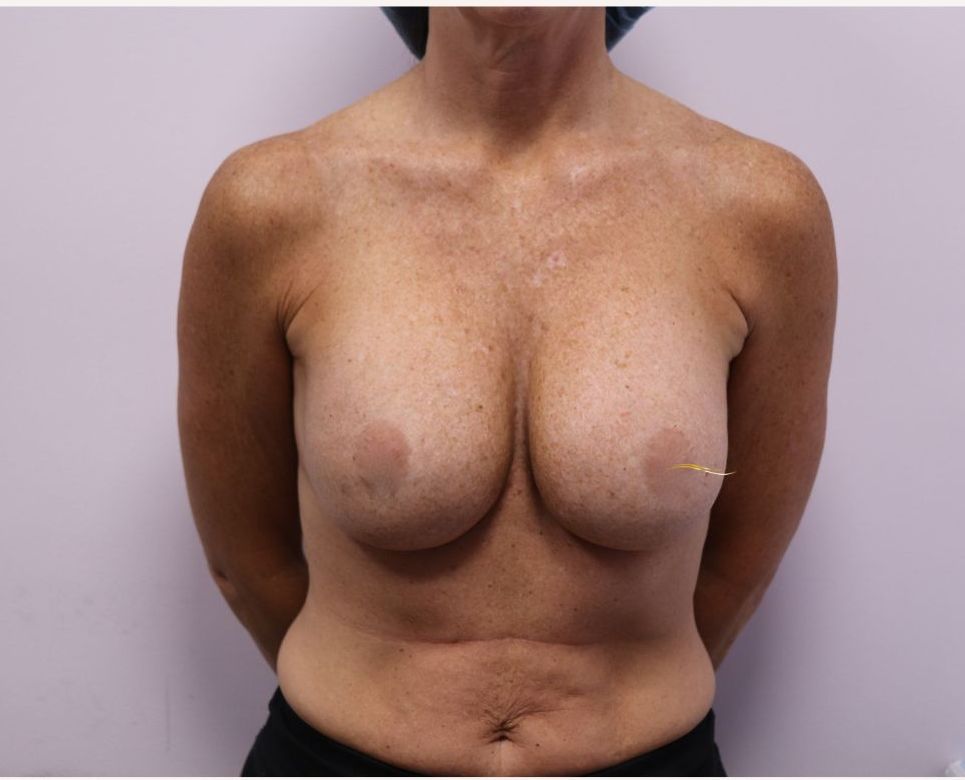
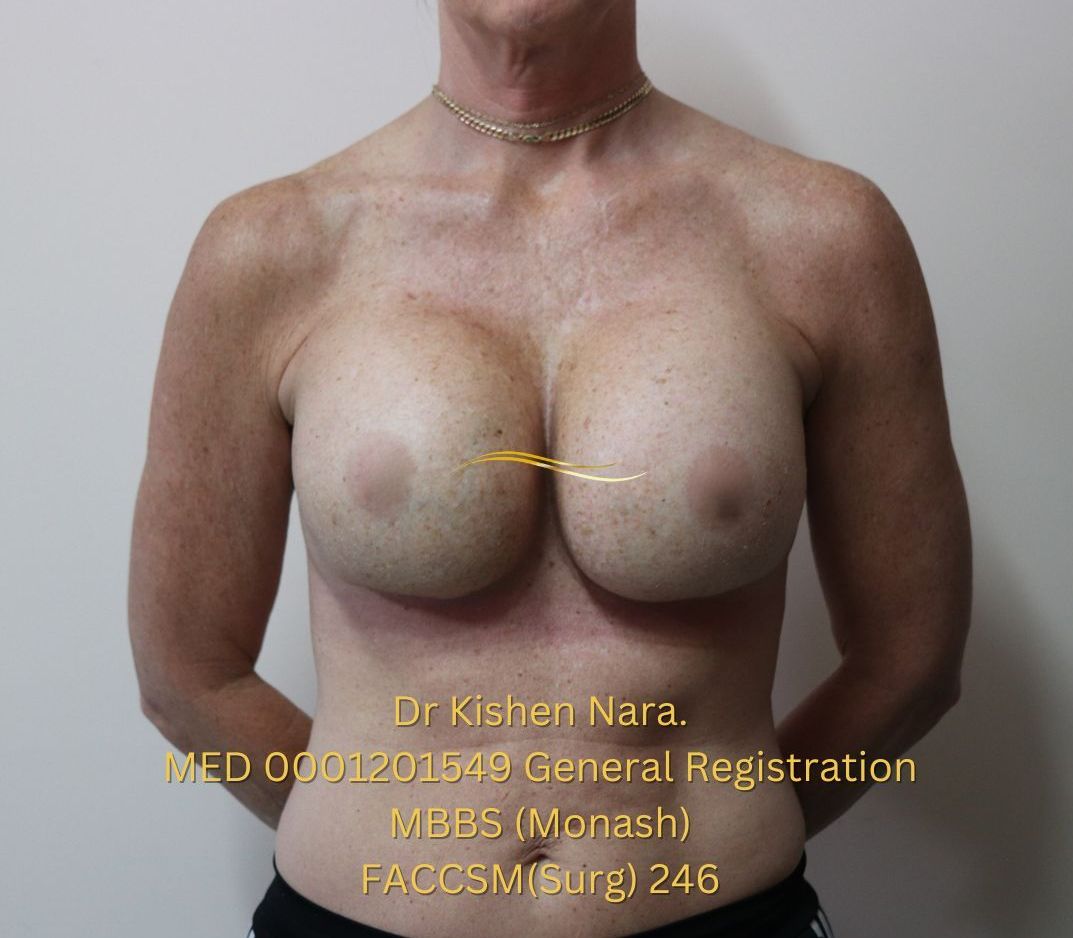
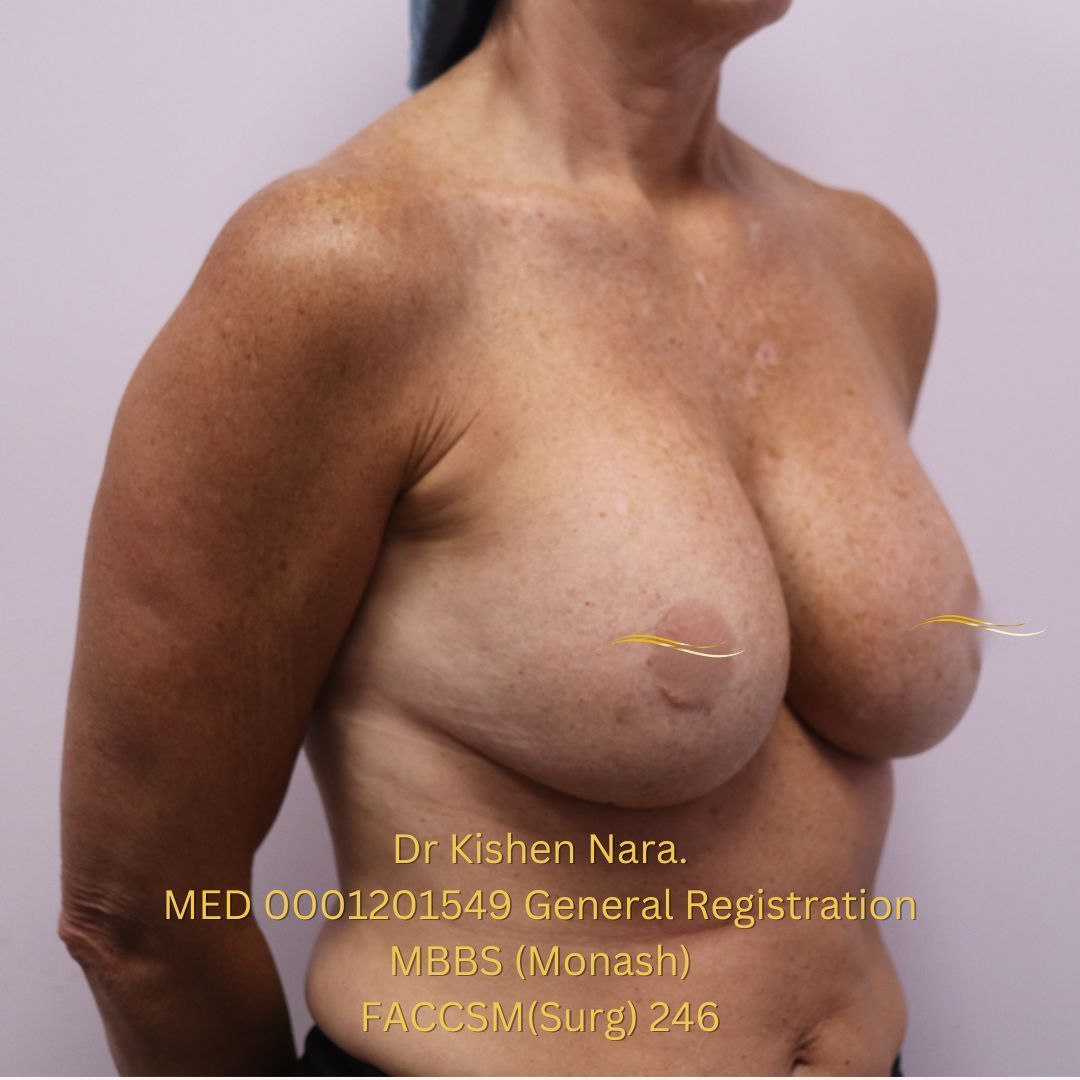
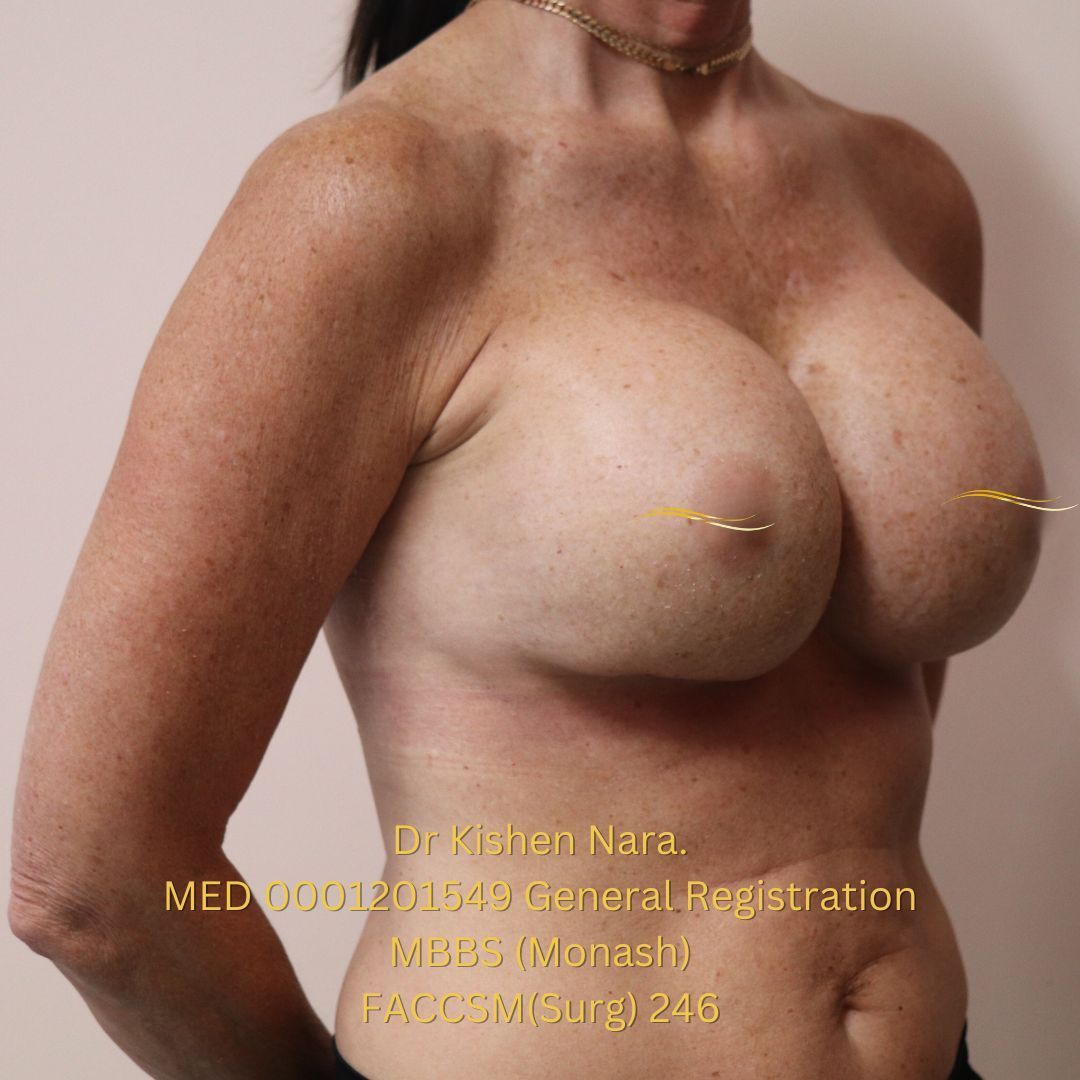
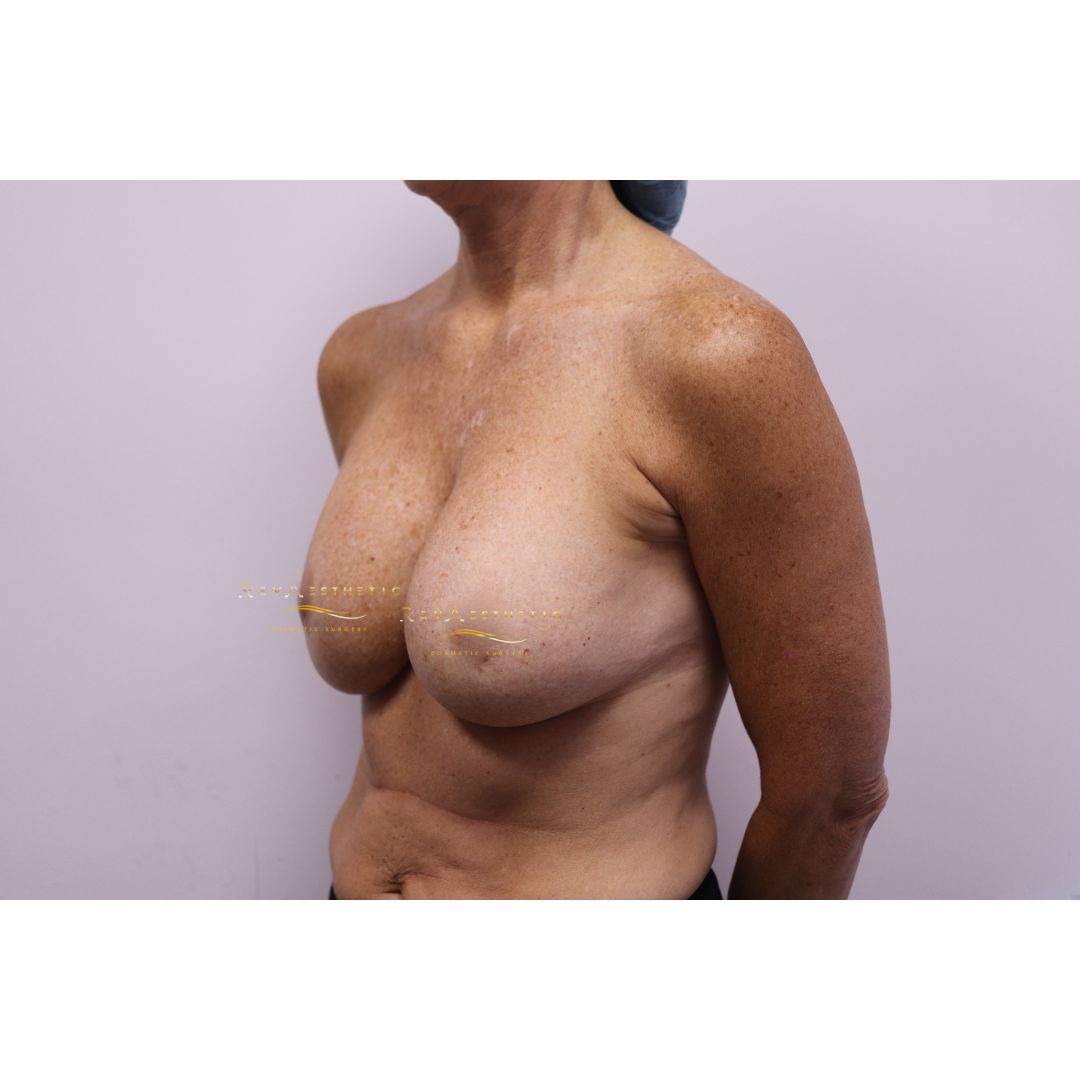
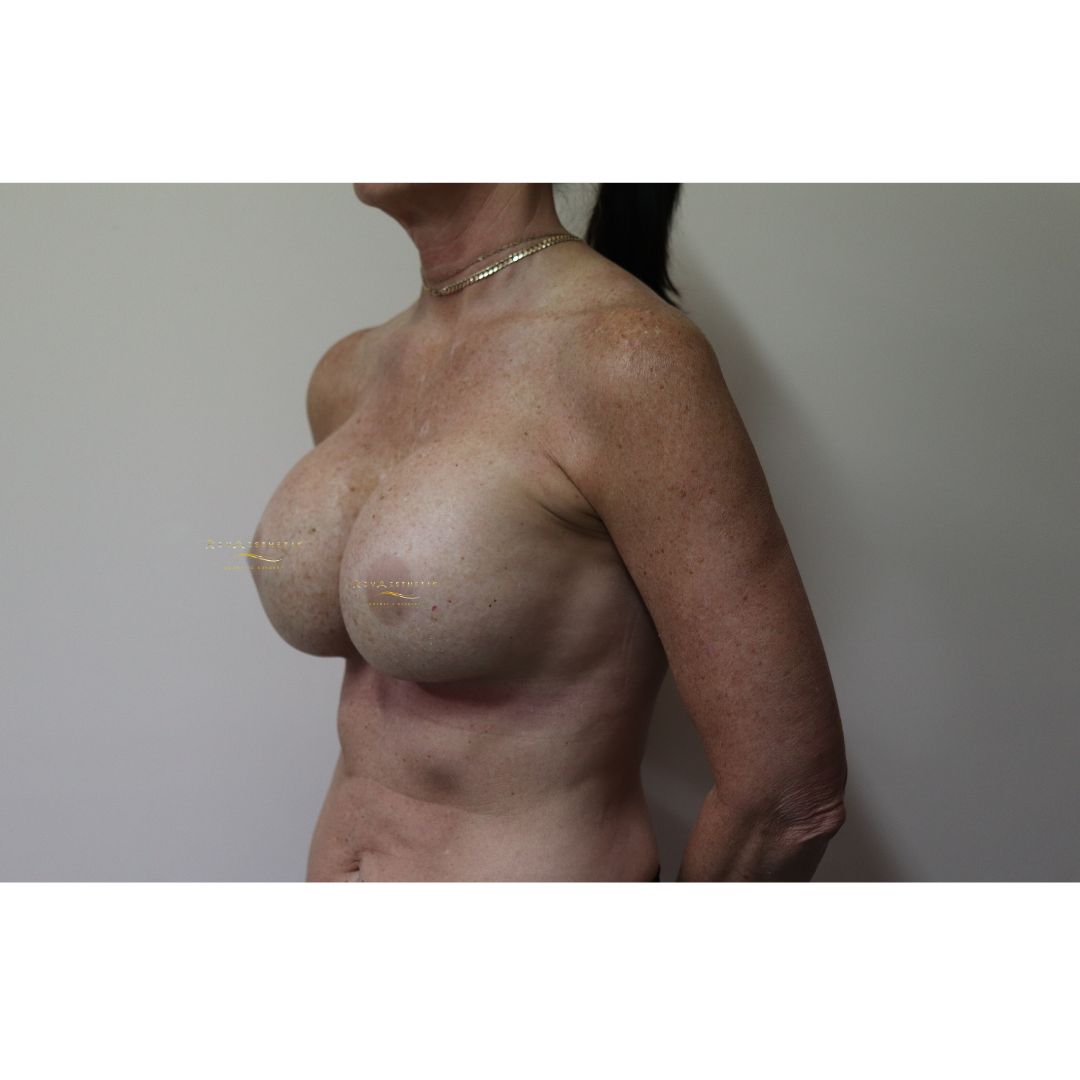
Each patient has varying outcomes depending on genetics, medical conditions, capacity to heal — and on the surgical options chosen, which significantly alter the scarring and the final result. These records are not generalisable and are used for education. Dr Nara and the team at RevAesthetic tailor each surgical plan to the individual patient, in line with Medical Board of Australia guidelines. If you would like to talk through what is — and isn't — addressable in your situation, the next step is a consultation.
Before you book
Come and speak with us about your expectations
We will work with you towards your goals in a trusted, safe and proficient manner. Results vary from patient to patient — each case is unique with its own anatomy, prior surgery, capsule history, risks and expectations.
All treatments have risks and benefits — to read those in detail, visit our risks of surgery page. It is important to seek a consult with your practitioner in person prior to any treatment, and we encourage you to seek a second opinion before proceeding.
Begin a conversation
Reserve your consult
Revision implant decisions are made in person, after a thorough assessment with a chaperone present. A formal quote is only provided after that consultation, because prior surgery, anatomy and the operative plan differ between patients.
Submitting this form sends your enquiry to Dr Nara's team. Please don't include sensitive medical details — those are discussed at consultation.